
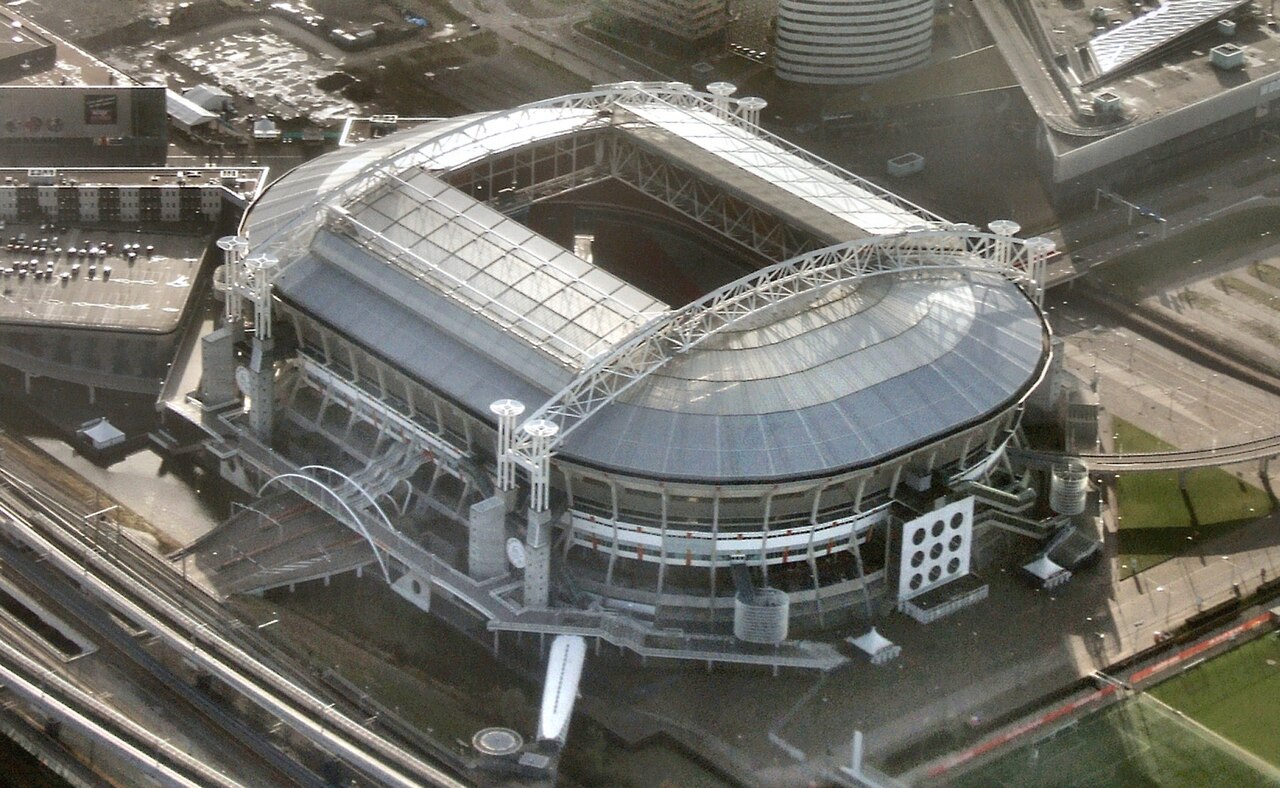
Sports facilities are the most unforgiving roof geometry we work on in San Antonio. The Alamodome and Frost Bank Center set the scale at the top of the market - long-span structures whose roofs cover multiple acres in a single uninterrupted plane, with deck heights that put a crew 100-plus feet above the seating bowl. We reference those buildings as context for what this inventory demands, not as claimed projects: the same engineering logic scales down to UTSA's athletic facilities, district high-school stadiums with covered grandstands, natatoriums, and the municipal sportsplexes and indoor practice facilities that have multiplied along Loop 1604 and US-281. Long spans move. Thermal cycling on a 160°F summer roof surface opens and closes structural joints daily, and every membrane, panel seam, and flashing detail has to accommodate that movement or it fails early.
The event calendar drives everything. An arena roof can't leak onto a hardwood floor, an ice sheet, or 10,000 seats - and it also can't be under tear-off when the building has a Friday load-in. We build stadium and arena scopes around dark-day windows: summer breaks for school districts, gaps between concert and convention bookings downtown, off-season months for competition venues. That usually means compressed production schedules with larger crews, staged material loading so no section is ever open ahead of an April-June convective storm, and a written temporary-waterproofing plan for every night the roof isn't closed. Hail is the recurring insurance event on this inventory; our pre-storm condition documentation - core cuts, seam photos, slope maps - is what separates a clean claim from a disputed one.
System selection on sports facilities splits three ways. Structural standing-seam metal dominates grandstand canopies and long-slope arena barrels because it spans purlin spacing and sheds the 30-plus inches of rain San Antonio takes in bursts. Fully adhered or induction-welded TPO and PVC handle the low-slope concourse, back-of-house, and flat arena decks, where 60-80 mil membranes with high-reflectance surfaces cut cooling load on buildings that condition enormous air volumes. Tensioned fabric and ETFE show up on newer canopies and practice facilities - light, translucent, but dependent on cable tension and clamp details that need annual inspection. We scope repair versus recover versus replace by deck condition and code: one recover layer is allowed, and on a 200,000-square-foot roof, that single decision can swing the budget by 40 percent.
Frequently Asked Questions
- What happens during a roof scope for Stadium & Arena Roofing?
- We review roof access, the existing system, drainage, penetrations, leak or damage history, and any photos or warranty records you already have. Then we document the repair, replacement, coating, or maintenance path that fits the building and timing.
- How quickly can you look at Stadium & Arena Roofing in San Antonio?
- For active leaks or storm damage, send the address, photos, access notes, and timeline through the form. Those details help us route the call, prepare the roof walk, and avoid wasting time on the first visit.
- What information helps price Stadium & Arena Roofing accurately?
- The useful details are roof type, approximate square footage, age, leak locations, access constraints, tenant hours, warranty paperwork, and any insurance or capital planning deadlines. Photos of drains, seams, penetrations, and interior staining help us scope faster.