
Where Commercial Roof Leaks Start in San Antonio
Penetration flashings: Pipe, conduit, electrical, mechanical, and duct penetrations are the highest-probability entry point on San Antonio commercial flat roofs. The pitch pocket and pitch pan flashing systems used on older roofs dry out and crack under San Antonio's extreme UV load - a pitch pocket that was sound at installation becomes a funnel for water infiltration within 10 to 15 years. We inspect every penetration on the roof above a reported leak, not just the visually obvious ones.
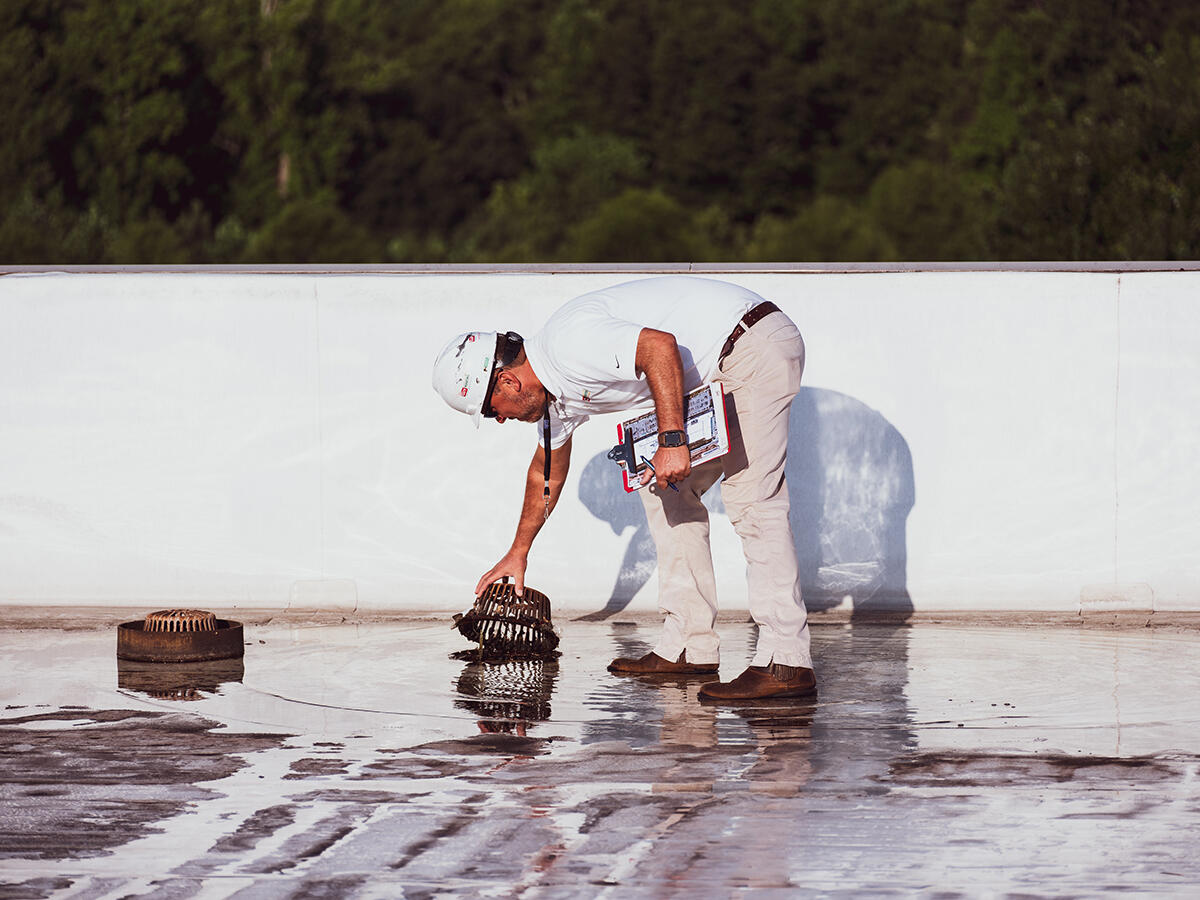
Drain and scupper flashings: Primary drains, overflow scuppers, and through-wall scuppers carry the highest water volume on the roof surface. The flashing at the drain bowl-to-membrane connection and at the scupper wall termination are high-stress points that are also high-traffic areas for HVAC maintenance. We lift every drain strainer above a reported leak area and inspect the drain bowl flashing condition.
Parapet base flashings: The base flashing at the parapet wall is the transition from the roof membrane to the vertical surface. Short base flashings - less than 8 inches of vertical height - allow water to wick up the wall and over the flashing termination under wind-driven rain conditions. San Antonio's summer thunderstorms produce 40 to 60 mph wind-driven rain that will find a low parapet flashing.
HVAC curb flashings: San Antonio commercial roofs have dense rooftop mechanical equipment. Each HVAC unit sits on a curb with a flashing that integrates the curb with the roof membrane. Curb flashings that were installed without a heat-welded cap strip, or that have separated at the top bond line, allow water infiltration directly into the building at equipment concentrations - which is often exactly where the ceiling stain appears.
Frequently Asked Questions
- What happens during a roof scope for Roof Leak Detection and Repair?
- We review roof access, the existing system, drainage, penetrations, leak or damage history, and any photos or warranty records you already have. Then we document the repair, replacement, coating, or maintenance path that fits the building and timing.
- How quickly can you look at Roof Leak Detection and Repair in San Antonio?
- For active leaks or storm damage, send the address, photos, access notes, and timeline through the form. Those details help us route the call, prepare the roof walk, and avoid wasting time on the first visit.
- What information helps price Roof Leak Detection and Repair accurately?
- The useful details are roof type, approximate square footage, age, leak locations, access constraints, tenant hours, warranty paperwork, and any insurance or capital planning deadlines. Photos of drains, seams, penetrations, and interior staining help us scope faster.