
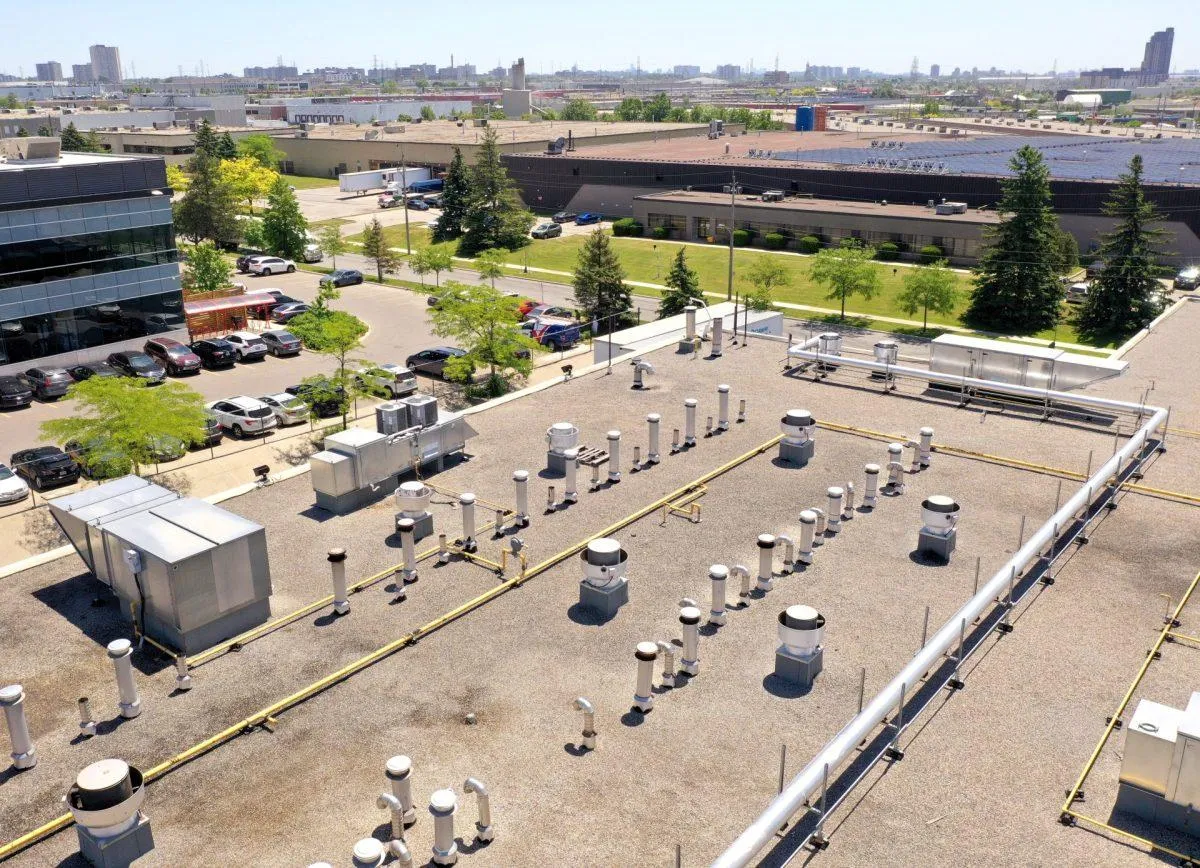
Roofing Built for San Antonio Food Plants
A food plant roof has to satisfy two things at once that usually pull against each other: a food-safety regime that dictates which materials can go above a production line, and a brutal moisture environment created by the plant's own operations. Get the materials wrong and a roof leak becomes a reportable food-safety event with a product hold behind it. Get the moisture management wrong and the roof corrodes itself from underneath while everything looks fine on top. We build food processing roofs for both realities from the start instead of solving them after a failure.
San Antonio carries a deep base of food manufacturing. H-E-B's commissary, bakery, and manufacturing operations are headquartered here, and the meat, tortilla, snack, dairy, and beverage processors are spread across the industrial corridors, the IH-35 South freight spine running toward the old Friedrich and Toyota districts, the East Side rail-served plants, and the South Side processing zone. These plants run hard, often two or three shifts, and the roof above the production floor is rarely something they can simply take offline. That is the building we specialize in keeping watertight.
Washdown Humidity Attacks the Deck From Below
The defining condition on a food plant roof is interior moisture. Daily high-pressure sanitation washdowns flood the space with warm, humid air. Cookers, kettles, fryers, and steam lines add to it. That vapor rises into the deck cavity and, without the right vapor retarder placed for South Texas conditions, condenses inside the assembly, saturates the insulation, and corrodes a steel deck from the top side where no one is looking. We have opened food-plant roofs that read as dry from the membrane down to rusted-through deck. We design the assembly so the dew point falls where moisture cannot collect, and we treat the vapor retarder as a structural decision, not an upgrade.
Refrigeration Changes Everything Above It
Freezers, blast cells, and chill rooms flip the physics. Now the building is driving cold up against a hot San Antonio roof, and the vapor drive reverses. The roof assembly over refrigerated space has to maintain thermal continuity with the cold chain, or you get condensation and ice forming inside the insulation, hidden deck corrosion, and a refrigeration system working harder to fight a wet, failing roof. We design tapered insulation and vapor control specifically around each space's operating temperature and the local climate, and we coordinate any work near rooftop condensing units and refrigeration lines with the plant's refrigeration team so the cold chain is never compromised.
Not Every Roofing Material Is Allowed Over Food
USDA- and FDA-regulated areas restrict what can go above a food-contact zone. White single-ply membranes, PVC and TPO, are generally acceptable over enclosed processing, but the specific product, and just as importantly the adhesives, primers, and sealants used in the flashings, has to be confirmed against the plant's food-safety plan. Many standard roofing adhesives carry solvents that have no business in a food environment. We verify material acceptability with the plant's quality team before we specify anything, and we keep documentation that QA can hand to an inspector who asks about the roof.
You Work When the Line Is Down, Not When It Suits You
A food plant gives you a narrow door. Often the only time the floor below is clean, protected, and idle is the weekly sanitation window or a planned shutdown. Roofing work that opens the envelope over an active line lives inside those windows, with the production and QA managers confirming the floor is clean and covered before we cut. We build the phasing plan around the production calendar and confirm same-day dry-in every shift, so the line comes back up over a watertight roof.
When a Leak Happens Mid-Run
A leak over a running line is an incident, not a work order. Our food-plant response puts a temporary dry-in over the breach fast, gets your QA and facilities team the documentation they need for their hold evaluation and reporting, and keeps water out of the product zone while the permanent repair is scheduled into the next sanitation window. We set up that emergency contact and protocol as part of every food-plant project.
Common Questions From San Antonio Food Plant Teams
Can you use any commercial membrane over our production floor?
No. USDA- and FDA-regulated areas require the membrane, and the adhesives, primers, and sealants in the flashings, to be confirmed acceptable for food environments. Several common roofing adhesives are solvent-based and not appropriate over food. We verify every material against your food-safety plan with your QA team before specifying it.
Why does our roof deck corrode when the membrane looks fine?
Washdown and process humidity rises into the deck cavity and, without a correctly placed vapor retarder, condenses inside the assembly and corrodes the steel deck from the top down. The surface can look watertight while the deck underneath rusts through. We core the assembly to find it and redesign the vapor control to stop it.
How do you handle the roof over our freezers and coolers?
Refrigerated space reverses the vapor drive, so the roof has to maintain thermal continuity with the cold chain. We design tapered insulation and vapor control around each space's operating temperature and the South Texas climate, and we coordinate any condensing-unit or refrigeration-line work with your refrigeration team so the cold chain is never broken.
When can you actually work if we run multiple shifts?
Inside your sanitation windows and planned shutdowns. We build the phasing around your production calendar, only open what we can dry in the same shift, and have your production and QA managers confirm the floor is clean and protected before we cut the envelope over an active area.
What happens if a leak shows up during production?
We treat it as a food-safety incident. We get a temporary dry-in over the breach quickly, provide your QA and facilities team the documentation they need for a hold evaluation, and keep the product zone protected until the permanent repair is scheduled into the next sanitation window.
Frequently Asked Questions
- What happens during a roof scope for Roofing Built for San Antonio Food Plants?
- We review roof access, the existing system, drainage, penetrations, leak or damage history, and any photos or warranty records you already have. Then we document the repair, replacement, coating, or maintenance path that fits the building and timing.
- How quickly can you look at Roofing Built for San Antonio Food Plants in San Antonio?
- For active leaks or storm damage, send the address, photos, access notes, and timeline through the form. Those details help us route the call, prepare the roof walk, and avoid wasting time on the first visit.
- What information helps price Roofing Built for San Antonio Food Plants accurately?
- The useful details are roof type, approximate square footage, age, leak locations, access constraints, tenant hours, warranty paperwork, and any insurance or capital planning deadlines. Photos of drains, seams, penetrations, and interior staining help us scope faster.