
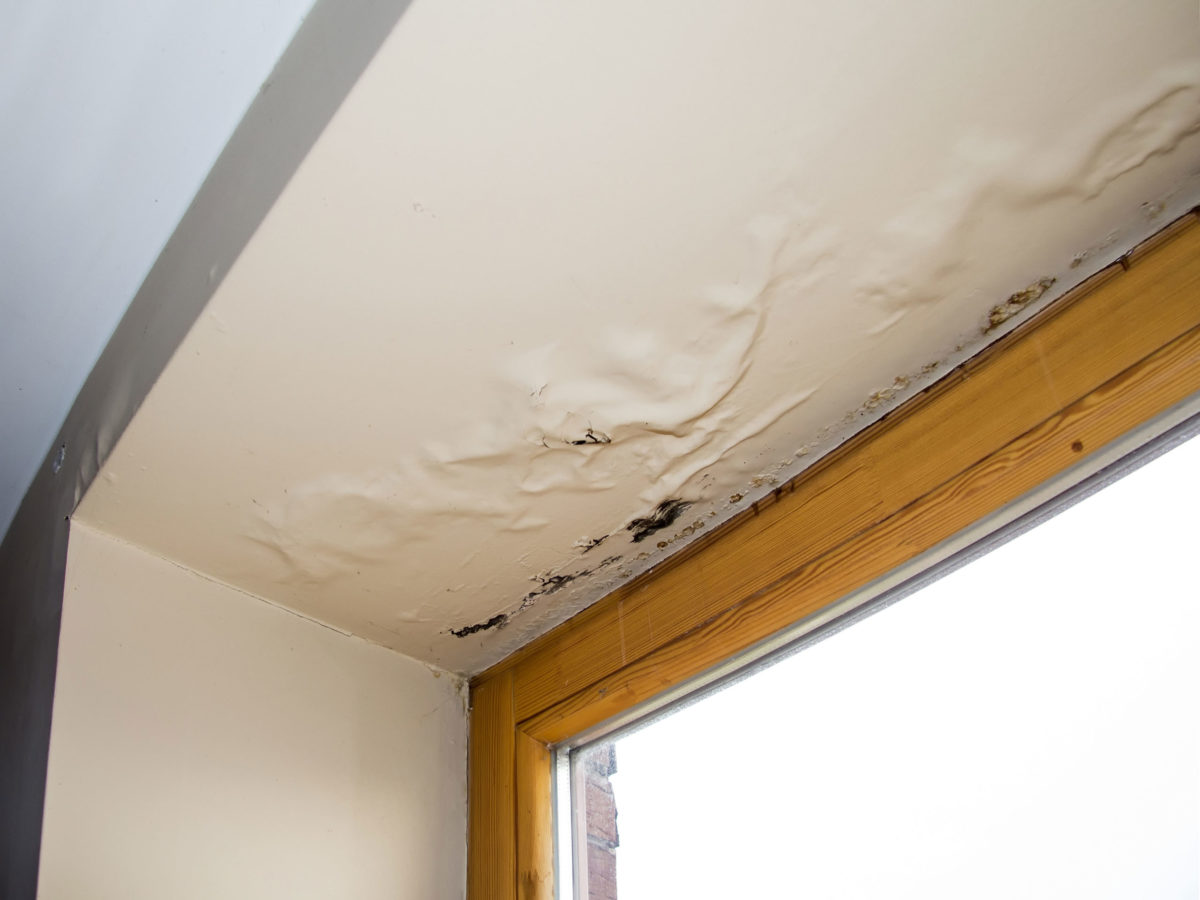
Sometimes the Roof Is Failing and the Rain Never Touched It
A building owner calls about a stain on the ceiling tile and a soft spot on the roof, and the reasonable assumption is that water got in from above. On a lot of San Antonio buildings, it did not. We open up the assembly and find the membrane intact, no puncture, no failed seam - and the deck rusting from the top down, the insulation soaked, the sheet delaminating. The water came from inside the building, rode up into the roof as vapor, hit a cold surface in the assembly, condensed, and has been sitting there working for years. That is a fundamentally different failure than a storm leak or simple wear, and if you diagnose it as a leak you will chase patches forever while the real cause keeps eating the roof.
San Antonio's air is the engine. The Gulf keeps humidity high across long stretches of the year, buildings run their cooling hard against summers that sit over 100 degrees, and the gap in temperature and vapor pressure between a chilled interior and a roof surface baking past 160°F drives water vapor upward through the assembly. When the roof's vapor management is wrong for that climate, or has worn out, the vapor finds a cold plane inside the roof, turns liquid, and stays put.
The Damage Has a Signature
Trapped interior moisture leaves a handful of patterns that, once you have seen them, you stop mistaking for ordinary aging:
- Blistering. Vapor pressure builds between the membrane and what it is bonded to and lifts the sheet into bubbles. On single-ply those blisters thin out and eventually split; on a built-up roof they pry the plies apart.
- Ridging. Moisture moving along the insulation board joints expands and contracts, and the membrane telegraphs that movement as long raised ridges tracing the board seams - a textbook sign of water working inside the assembly rather than ponding on top of it.
- Saturated insulation. Wet insulation stops insulating. The building bleeds conditioned air through the roof, cooling costs climb, and the soaked board loses the rigidity and the slope it was installed to hold.
- Deck corrosion. On a steel deck, persistent moisture rusts the deck from the top side down. Left alone long enough it perforates the deck and turns a roofing repair into a structural one.
The trap with all of it is timing: by the time a wet area is obvious from the surface, the moisture has almost always spread well past it. Water travels sideways through insulation, so the visible blister marks the middle of the problem, not its edge.
The Vapor Barrier Is Usually Fighting the Climate
The root cause we turn up most often is a vapor strategy working against San Antonio instead of with it. In a cooling-dominated, humid place, the dominant vapor drive is upward and outward - from the conditioned interior toward the hot roof surface. That means the vapor retarder belongs low in the assembly, near the warm interior side, where it can stop moisture before it climbs to the cold condensing surfaces above. Plenty of older roofs here were built with the retarder in the wrong position, or with one that has since been punctured at penetrations, torn during prior work, or left out altogether. Any of those opens a path for interior vapor to reach the insulation and condense.
This is exactly why a recover overlay done without thinking through vapor is a mistake we will not make for a client. Lay a fresh membrane over a misdesigned, already-wet assembly and you have sealed the moisture in tighter and rebuilt the same failure under a brand-new roof. The vapor layer gets corrected as part of the work, or the recover does not happen.
The San Antonio Buildings Most Exposed
High interior moisture loads make some buildings far more prone to this than others. We see it concentrated in food processing and manufacturing plants around the Southside and the East Side industrial districts, where wash-down and process steam load the air; in hotels and multifamily buildings along the River Walk and through the downtown and Pearl-area corridors, with constant laundry, kitchen, and pool humidity; in healthcare and lab facilities across the South Texas Medical Center, where interior humidity is deliberately held high; and in warehouses near Port San Antonio and the I-35 corridor that were converted to humidity-generating uses the original roof was never designed to handle. When the inside of the building runs wet, the roof's vapor design has to be right, or the roof fails early.
We Diagnose It Before We Price It
We do not guess at hidden moisture and we do not quote a repair off a surface glance. We run an infrared moisture survey. After sunset, saturated insulation releases the day's stored heat more slowly than the dry roof around it, so the wet areas read as warm zones on the thermal sensor while the dry field has already cooled - that maps the extent of the moisture across the whole roof. Then we cut a few cores at the flagged spots to confirm we are seeing water, to measure how deep the saturation runs, to check the steel deck for corrosion, and to find out where the vapor retarder actually sits and whether it failed. On any building that has not had a documented moisture survey in the last three years, we recommend one before any major roofing decision - water caught early is a patch, water caught after it has eaten the deck is a tear-off.
Repair, or Replace - the Survey Decides
What the scan shows sets the path. When the wet insulation sits in discrete zones with sound dry roof around them, we cut out the saturated material, dry the opening, replace it with new insulation that restores the slope and the thermal value, weld or seal the membrane back over the repair, and correct the vapor and flashing details in that zone so it cannot refill. When the survey shows wet insulation across a large share of the roof - generally past a quarter to a third of the area - or the deck has corroded structurally, spot repair stops making sense and full replacement with a properly designed vapor strategy is the honest call. Either way you get the survey report, the core findings, and side-by-side pricing for the repair and the replacement, so the decision stays yours and it is an informed one.
Humidity & Trapped-Moisture Repair Questions
How do you find moisture that isn't visible from the roof surface?
Infrared scanning. We run a thermal sensor after dark, when wet insulation still holds the day's heat and reads warmer than the cooled dry roof around it, which maps where moisture is trapped. We then confirm the flagged areas with core cuts that also reveal saturation depth, deck corrosion, and the condition of the vapor retarder.
Why does moisture get trapped inside the roof in a humid climate?
In San Antonio's cooling-dominated, humid climate, vapor drives upward from the conditioned interior toward the hot roof. If the vapor retarder is missing, damaged, or placed wrong - above the insulation instead of near the warm interior side - that vapor reaches a cold surface inside the assembly, condenses, and saturates the insulation over time, even with no rain getting through the membrane at all.
Can a humidity-damaged roof be repaired instead of replaced?
If the wet insulation is in defined zones with dry roof around it, yes - we cut out and replace the saturated material, restore the membrane, and fix the vapor detailing so it does not recur. Full replacement is the right call when saturation covers a large share of the roof or the steel deck has corroded structurally. The infrared survey tells us which situation you are actually in.
How fast does this get worse if we leave it?
Steadily, and it accelerates. Wet insulation drives up cooling costs immediately, the saturation keeps spreading laterally through the board, and deck corrosion advances underneath. A roof reading 15% wet coverage, left alone for a couple of seasons, can come back at 40 to 50% at the next survey, turning a manageable repair into a full replacement.
Why not just recover the roof with a new membrane?
Because a recover laid over a wet, misdesigned assembly seals the moisture in and rebuilds the same failure under a new roof. If we recover, the wet material comes out first and the vapor strategy gets corrected - otherwise full replacement is the sounder investment.
Frequently Asked Questions
- What happens during a roof scope for Sometimes the Roof Is Failing and the Rain Never Touched It?
- We review roof access, the existing system, drainage, penetrations, leak or damage history, and any photos or warranty records you already have. Then we document the repair, replacement, coating, or maintenance path that fits the building and timing.
- How quickly can you look at Sometimes the Roof Is Failing and the Rain Never Touched It in San Antonio?
- For active leaks or storm damage, send the address, photos, access notes, and timeline through the form. Those details help us route the call, prepare the roof walk, and avoid wasting time on the first visit.
- What information helps price Sometimes the Roof Is Failing and the Rain Never Touched It accurately?
- The useful details are roof type, approximate square footage, age, leak locations, access constraints, tenant hours, warranty paperwork, and any insurance or capital planning deadlines. Photos of drains, seams, penetrations, and interior staining help us scope faster.