
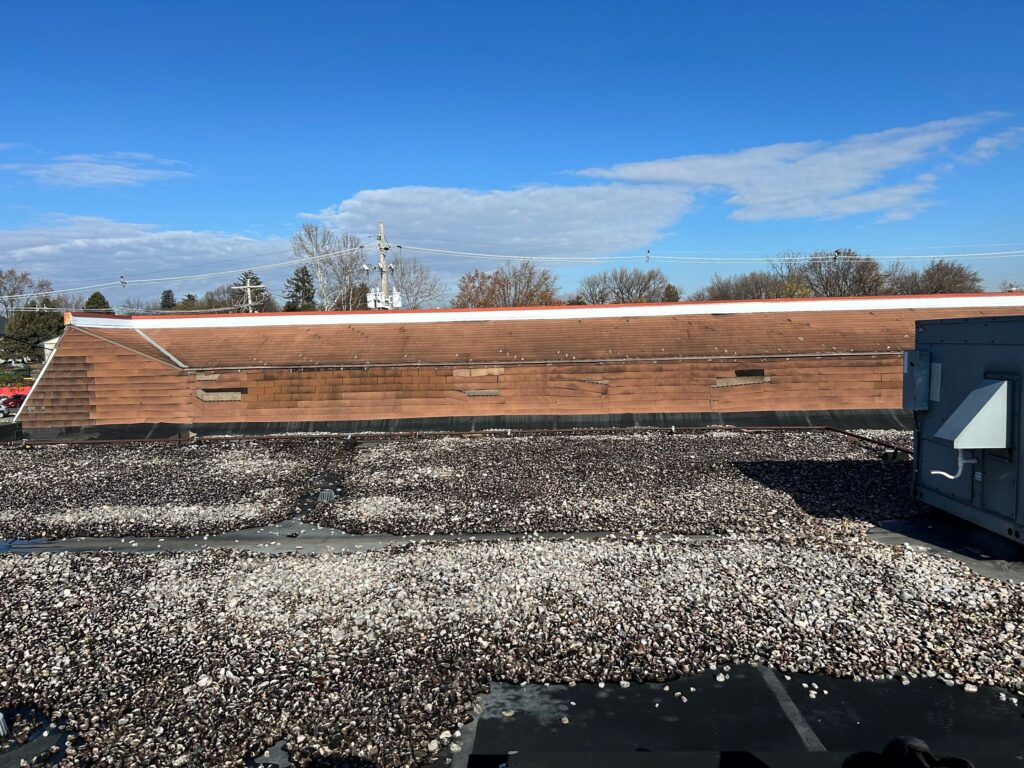
What We Do in the First Hours
On arrival, we locate the active breach before placing any cover material. Placing tarps or cover boards over the wrong area does not stop the water entry and delays the permanent repair. We walk the roof in rain gear if necessary, identify the water travel path from interior stain to roof surface breach, and execute a targeted dry-in at the confirmed location.
Dry-in methods depend on the membrane type, the breach size, and the weather conditions at the time. On TPO and EPDM roofs, we use manufacturer-compatible peel-and-stick patches or pre-cut membrane panels with contact adhesive. On modified bitumen roofs, cold-process adhesive and mineral-surface cap sheet patches. For large breaches or structural damage - as can occur after a hail event severe enough to penetrate the membrane and insulation - we install cover boards over the affected area and seal the perimeter.
After the dry-in is confirmed stable, we document the breach location, the dry-in method, and the materials used with photos. This documentation is the starting point for the permanent repair scope, which we produce within 24 to 48 hours of the emergency call.
Common Emergency Scenarios Across the San Antonio Metro
Post-hail membrane breach: Hill Country storm cells tracking southeast regularly produce large-format hail across San Antonio metro. Hail above 1.5 inches diameter can breach TPO and EPDM membranes, particularly on roofs with standard-density insulation under the membrane. We scope post-hail damage in a systematic grid pattern, mark and photograph every breach, and produce a hail-damage report formatted for insurance claim submission.
Post-freeze flashing failure: The February 2021 Uri freeze produced widespread flashing failures across the metro - the thermal shock cracked pitch pans, pipe boots, and parapet counterflashings that had been functioning normally for years. We handled emergency calls from buildings in the USAA campus area on Babcock Road, the Toyota Manufacturing-adjacent industrial corridor on Applewhite, and multiple hospital-adjacent medical office buildings near the Baptist Health System campuses. Many of those failures showed no prior symptoms - the freeze was the triggering event.
Hurricane remnant events (July through October): San Antonio does not take direct hurricane landfalls, but tropical systems that enter the Gulf and weaken over South Texas produce sustained rainfall events that overwhelm compromised roof drains and flashings. We monitor NWS San Antonio tropical advisories and pre-stage crews before major remnant events to minimize post-storm response lag.
Frequently asked questions
What is the difference between an emergency dry-in and a permanent repair?
An emergency dry-in stops the water entry using temporary materials and methods - the goal is to protect the building interior immediately. A permanent repair is executed with manufacturer-specified materials and methods under controlled conditions and produces a documented, warranty-aligned repair. We execute the dry-in first, then schedule the permanent repair once weather stabilizes and we have the materials on hand. The dry-in is not a substitute for the permanent repair, and we say so in writing.
Do you respond to emergency calls on weekends and holidays?
Yes. Our emergency line is staffed 24 hours a day, seven days a week, including weekends and holidays. Response times apply the same regardless of the day. Call 210-985-8160 and press the emergency response option - you will reach a dispatcher who can confirm availability and initiate mobilization.
Can you help with the insurance claim after a storm event?
We produce written documentation - photo-keyed damage reports, material quantities, repair scope - formatted for commercial property insurance claims. We work alongside your adjuster and can be on the roof during the adjuster's inspection to walk through the documented damage. We do not negotiate claims on your behalf, but the documentation we produce is designed to give your adjuster a complete factual record.
What if I am not sure whether my roof needs emergency response or can wait?
Call us. A project manager will ask a few questions - how heavy the water entry is, what is below the leak, whether the weather is continuing - and help you decide whether same-day or scheduled response is appropriate. Active water entry into an occupied space, IT equipment, medical equipment, or food-service areas almost always warrants emergency response. A slowly drip-weeping seam on a vacant warehouse can usually wait for a scheduled scope visit.
Commercial roof emergency in San Antonio? Call us now.
24/7 emergency dry-in response across Bexar County and the surrounding metro. Four-hour response in the urban core, same-day on the Loop 410 ring, next-day to outer suburbs.
Request a Roof Scope