
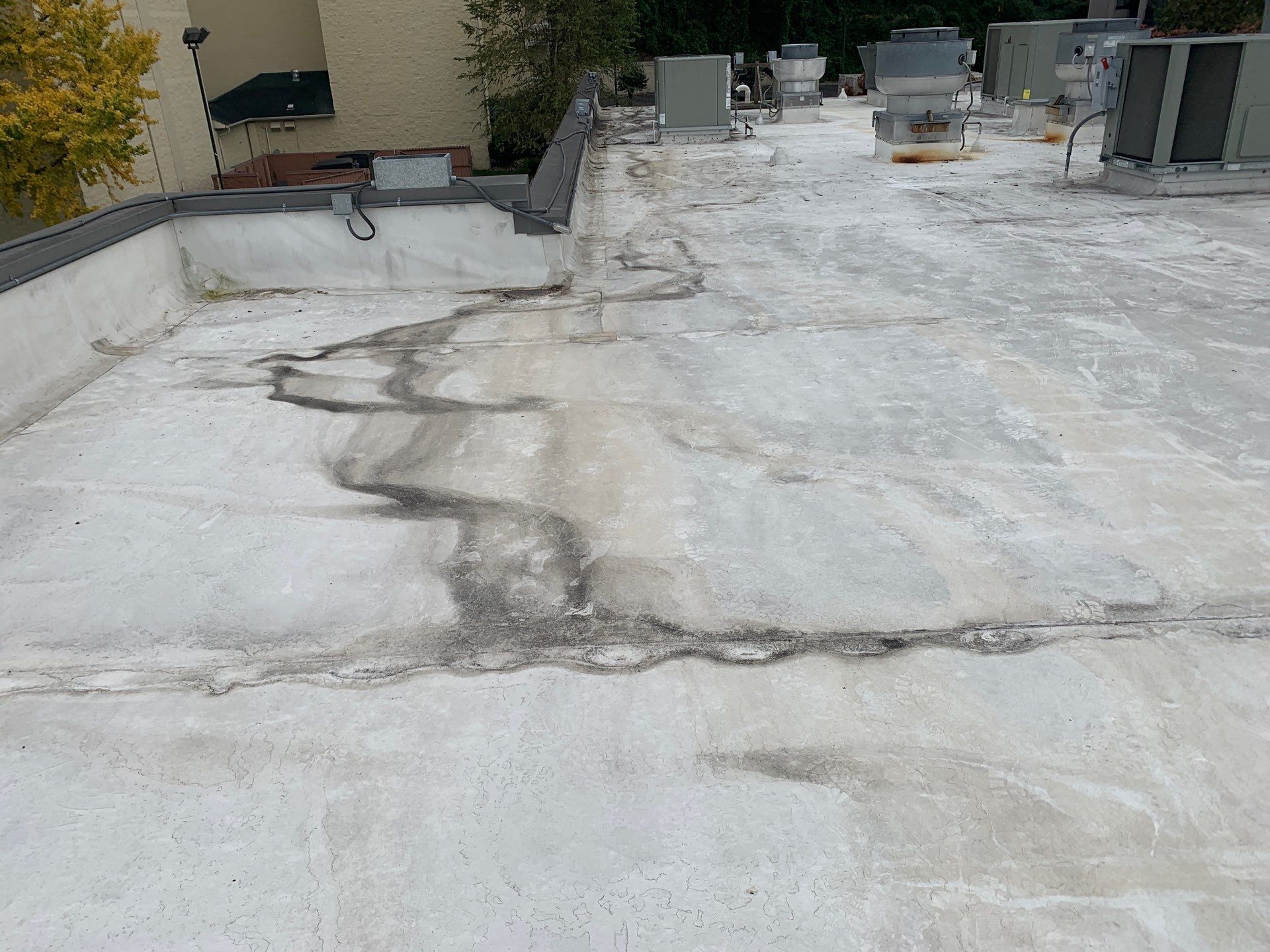
Wind Damage Patterns on San Antonio Commercial Roofs
Edge metal and perimeter failure: The FM 4435 and ANSI/SPRI ES-1 edge metal standards exist because perimeter terminations are the most wind-critical detail on a flat roof. Edge metal that was installed under-fastened, at the wrong depth, or with insufficient batten bar engagement will fail at a wind speed below what the membrane itself can withstand. We inspect edge metal engagement depth, fastener spacing, and sealant condition at the termination bar, and we document the failure pattern to determine whether the edge metal installation met specification.
Membrane field blow-off: Mechanical attachment fastener patterns are designed against a specific wind uplift pressure - the ASCE 7-22 calculation for the building's location, height, and exposure category. When field membrane blows off in large sections, it usually indicates either an inadequate fastener pattern for the actual wind exposure or fastener pull-through into degraded insulation or deck. Pull-through is common on buildings where the insulation is wet or where the metal deck has surface corrosion. We probe the fastener pullout resistance and document the deck condition underneath.
Parapet flashing displacement: Parapet flashings that were improperly bonded or had dried lap adhesive can lift and separate in wind events. The separation opens a direct water-entry point at the base of the parapet and is often the source of leak calls that come in during or after a wind-driven rain event. We inspect every parapet flashing termination and document which separations are event-related versus which show dried adhesive consistent with pre-existing deterioration.
Rooftop equipment displacement: HVAC units, condenser pads, and rooftop exhaust housings that were not properly anchored to the deck can shift or overturn during high-wind events. Shifted equipment tears the membrane at the curb flashing and creates an immediate water-entry point. We document equipment position, anchor condition, and curb flashing integrity at every rooftop unit after a wind event.
Frequently Asked Questions
- What happens during a roof scope for Wind Damage Roof Repair?
- We review roof access, the existing system, drainage, penetrations, leak or damage history, and any photos or warranty records you already have. Then we document the repair, replacement, coating, or maintenance path that fits the building and timing.
- How quickly can you look at Wind Damage Roof Repair in San Antonio?
- For active leaks or storm damage, send the address, photos, access notes, and timeline through the form. Those details help us route the call, prepare the roof walk, and avoid wasting time on the first visit.
- What information helps price Wind Damage Roof Repair accurately?
- The useful details are roof type, approximate square footage, age, leak locations, access constraints, tenant hours, warranty paperwork, and any insurance or capital planning deadlines. Photos of drains, seams, penetrations, and interior staining help us scope faster.