
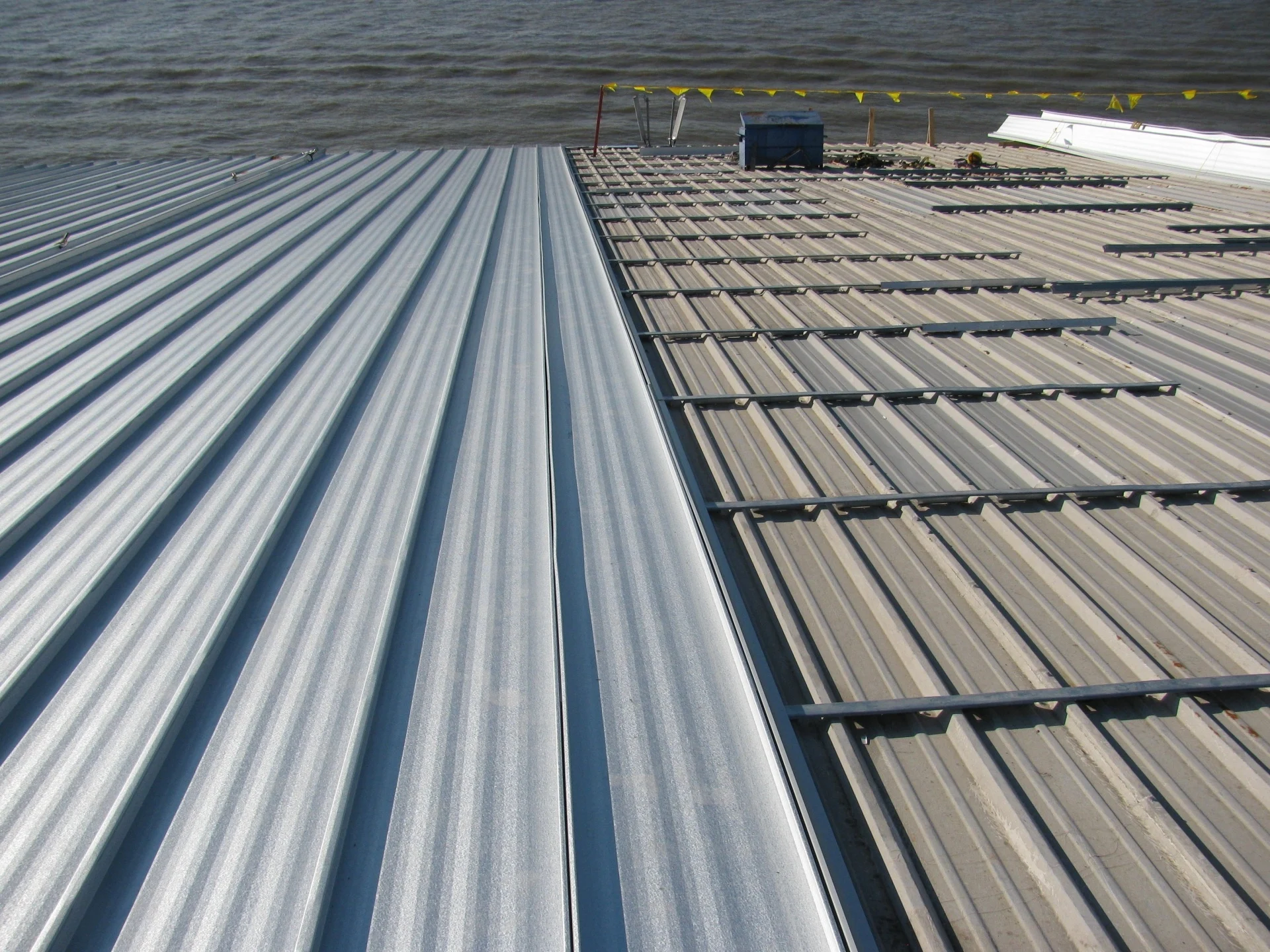
Commercial Roof Replacement in San Antonio
Roofing Services

Commercial Roof Replacement in San Antonio

Full-system tear-off and replacement for San Antonio commercial flat roofs - TPO, EPDM, PVC, modified bitumen - with manufacturer-warranty closeout and documented capital handoff.

Scope Type
Roofing Services
Location
San Antonio, TX
Status
Scheduling Roof Walks
Focus
Repair history, moisture risk, roof access, system condition, and replacement timing.

Most commercial roof replacements in San Antonio get scoped reactively. The roof leaks, someone calls three contractors, and the lowest bid wins. That replacement often runs the same membrane on the same insulation with the same flashing details - and then leaks again within two years because nobody fixed the underlying moisture intrusion path. We do not work that way.

Our replacement scope starts with a roof walk and moisture-core pulls on any roof where we suspect saturated insulation. We document deck condition, parapet flashing condition, drain flow, every penetration, and the pattern of prior repairs. We have scoped replacement work on buildings across San Antonio metro - from older warehouse inventory on the IH-, to mid-rise office buildings in the Stone Oak US-281 corridor, to the medical campus buildings tied to the Methodist Hospital System and Baptist Health System campuses.

The deliverable at closeout is the warranty document, the roof zone diagram with all closeout photos, the maintenance contract that keeps the warranty active, and a written capital record the next reroof cycle can build against - not a stack of receipts that the next building owner has to reconstruct from scratch.

Recover vs. Replace - How We Make the Call

Recover-versus-replace is the first decision in any aging-roof scope. We pull moisture cores in five to ten representative locations on roofs we suspect have insulation saturation. If more than 25% of cores read wet, replacement is the honest scope - recovering wet insulation traps the moisture underneath the new membrane and voids the new warranty. If under 25%, a recover with targeted insulation replacement at wet areas can extend the asset another 15 to 20 years at roughly half the capital cost of full tear-off.

San Antonio's July and August surface temperatures are extreme - dark membrane roofs in this climate can hit 165°F on the substrate during peak heat, which accelerates insulation degradation faster than the same system would degrade in a milder climate. We account for this in our service-life estimates. A 20-year-old roof in San Antonio may have a shorter remaining useful life than a 20-year-old roof in Chicago, and we will say so directly in our written scope.

Deck condition is the second decision. We pull deck inspection ports under wet cores and at obvious deflection points. Corroded metal deck or rotted plywood means deck replacement before the new system goes down - which moves the project into a different cost band and a different permit category. Owners need to know this before the project starts, not when the crew opens up the roof and stops work.

What the Replacement Scope Specifies

Membrane: TPO 60-mil or 80-mil for most San Antonio commercial buildings - the standard specification for warehouse, retail, and office buildings where heat reflectivity and weld-seam durability matter. EPDM 60-mil for industrial buildings with high mechanical traffic on the roof surface. PVC 50-mil or 60-mil for restaurant roofs and buildings with high chemical exposure at penetrations. Modified bitumen for buildings with existing BUR systems where the recover path makes economic sense and the deck can support the additional weight.

Insulation: We specify to current Texas energy code (IECC 2021 minimum R-25 for low-slope commercial). The typical stack in San Antonio runs polyiso primary insulation - which performs well in heat but loses R-value below 40°F, a consideration the February 2021 Uri freeze exposed - plus a cover board (HD polyiso or gypsum) for membrane attachment. Tapered insulation packages are designed against the actual ponding patterns we documented during inspection, not against a generic slope-to-drain assumption.

Fastener pattern: Designed against IBC 2021 wind-uplift requirements for the building's exposure category. San Antonio is generally Exposure B to C depending on terrain and adjacent buildings. Buildings near open-exposure terrain on the Northwest Side or along the IH-10 West corridor toward Boerne receive more conservative fastener density.

Manufacturer warranty path: 20-year NDL (no-dollar-limit) warranty is standard for 60-mil TPO and EPDM systems from GAF, Carlisle, Johns Manville, Sika Sarnafil, and Versico. PVC systems can carry 25-year warranties. The warranty requires documented annual maintenance - we build that into the closeout package so the warranty does not lapse quietly.

Project Sequencing and Tenant Coordination

Pre-construction: Permits filed with the City of San Antonio Development Services Department or the relevant municipality (Leon Valley, Converse, Live Oak, Schertz, New Braunfels). Pre-job meeting with the building's facility manager to set crane staging and material lay-down zones. Tenant notification distributed before we mobilize.

Production: Tear-off staged in 5,000 to 10,000 sq ft sections with same-day dry-in on each section. During July through September we run production crews from 6 AM to noon to avoid the worst heat-stress window for both crew safety and membrane bond quality - TPO welds are compromised above 130°F substrate temperature, and San Antonio regularly exceeds that by midday in summer.

Closeout: Punch walk with the building's facility manager and our project manager. Manufacturer warranty inspection with the manufacturer's field representative. Closeout package delivered: warranty document, photo-keyed zone diagram, maintenance contract, manufacturer start-up documentation, and the written record of the deck and insulation conditions we documented at tear-off.

Frequently asked questions

How long does a typical San Antonio commercial roof replacement take?

For a 50,000 sq ft single-story commercial building with no deck replacement and no major rooftop equipment conflicts: approximately 3 to 4 weeks of production from tear-off through closeout, assuming normal weather cooperation. San Antonio's July-September heat limits productive hours to the early morning, which extends summer timelines by 20 to 30 percent compared to spring or fall work. We give a written production schedule before contract signing.

Will my building be exposed to rain during the replacement?

No. We tear off only what we can dry-in the same day. Each 5,000 to 10,000 sq ft section gets a same-day dry-in - typically a single-ply membrane lap with mechanical fasteners - before we leave the site. We monitor the NWS San Antonio forecast daily and pause planned tear-off when rainfall probability exceeds 40% for the same day.

Does Texas require roofing contractor licensing?

Texas does not require a state roofing contractor license. We carry general liability, workers' compensation, and umbrella coverage at limits that support every commercial building we work on - certificates available on request. We pull City of San Antonio building permits for all replacement work and for repair work above the permit threshold. Our project managers know the San Antonio Development Services permit process and the typical review timelines.

Get a written replacement scope for your San Antonio building.

Our project managers will walk the roof, pull moisture cores if the recover-vs-replace decision depends on it, and deliver a written scope detailed enough to put to bid.

Request a Roof Scope

Need Commercial Roof Replacement in San Antonio?