
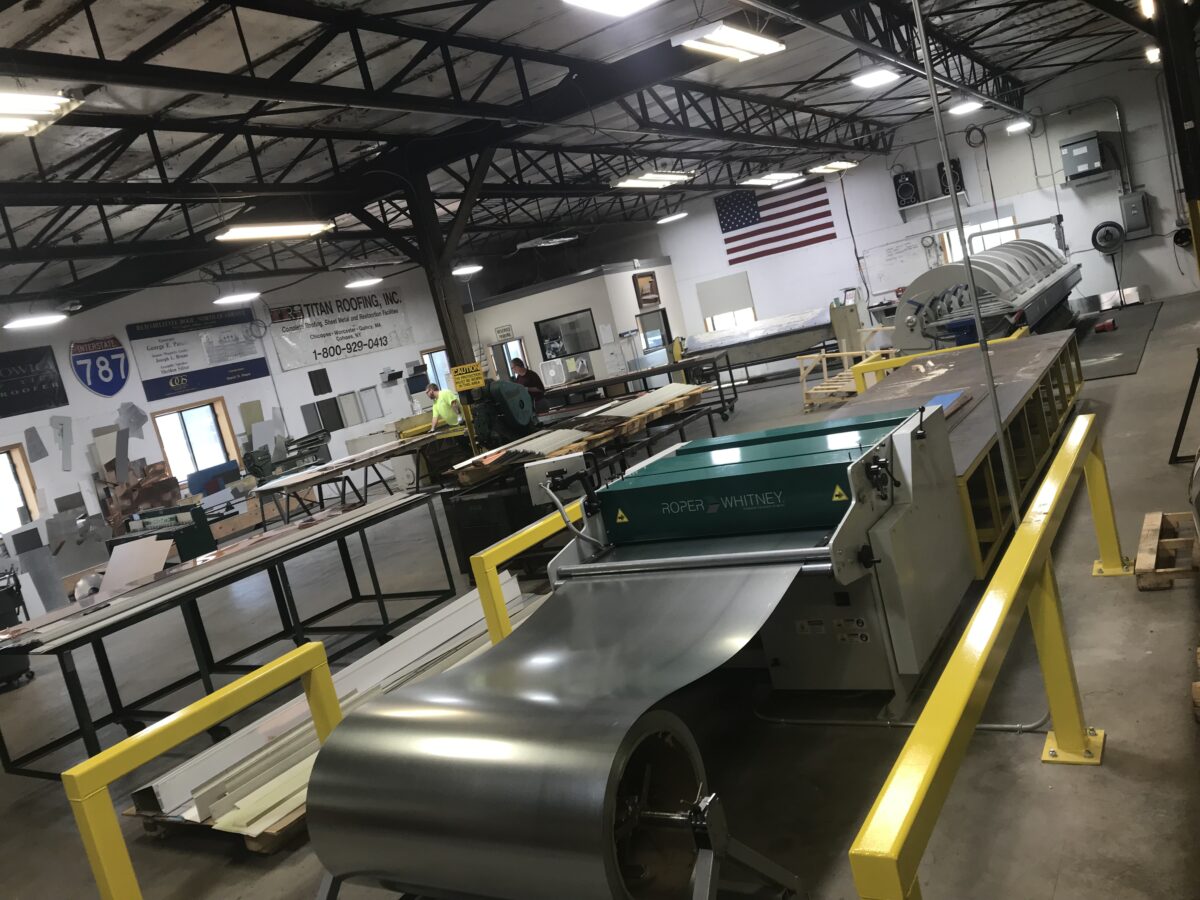
Toyota Motor Manufacturing Texas on Applewhite Road in South San Antonio is the region's manufacturing anchor. The 2.2-million sq ft facility produces the Toyota Tundra and Tacoma pickups and carries a roofing inventory of that scale - multiple roof zones, varying membrane ages, metal roof sections over the stamping and assembly areas, and roof penetrations for process ventilation, compressed air systems, and painting line exhaust that are denser and more chemically complex than any standard commercial building.
Caterpillar's manufacturing operations in Seguin - 35 miles east of San Antonio - represent a different challenge: heavy industrial construction with crane bays, high-clearance roof structures, and process heat exhaust from metalworking and machining operations. CPS Energy's generating stations and substation buildings across the SA metro add electrical utility infrastructure roofing: high-security sites with contractor credentialing requirements, control room buildings where any roofing-related intrusion into the building envelope is a system reliability concern.
Manufacturing facility roofing is scoped around production schedules, not roofing contractor convenience. A Toyota production line shutdown is a defined event - annual model changeover, planned maintenance windows - and any roofing work that requires production interference must be scheduled against those windows years in advance in some cases. We understand that constraint and scope accordingly.
Chemical and Process Exhaust - Penetration Specification
Manufacturing roofs carry process exhaust penetrations that do not appear on warehouse or office building roofing scopes. Paint line exhaust at Toyota's Applewhite facility carries solvent-laden vapors that degrade standard TPO and EPDM flashing sealants on contact. Metalworking coolant exhaust at Caterpillar generates oil mist at penetrations. CPS Energy facilities have sulfur dioxide and other combustion byproduct exhaust that requires flashing details compatible with acid exposure.
We specify penetration sealants by the chemical environment at each exhaust location - not a single sealant for the whole roof. The Carlisle WIP 300HT or Sika Sarnafil-compatible butyl tape for standard penetrations; EPDM or silicone-based sealants for solvent-exposure locations; acid-resistant EPDM or FPO membrane for high-chemical exhaust locations. We document the sealant specification by penetration at closeout so the next maintenance scope knows what was installed and why.
Paint line exhaust penetrations at Applewhite and similar automotive facilities also present a fire risk - solvent vapors near welding equipment or torches are a hazard. Hot-work permits are mandatory on any Toyota or automotive supplier facility, and the hot-work permit system at those sites is more rigorous than on standard commercial buildings. We follow Toyota's and the supplier's specific hot-work protocols, which may include gas monitoring, additional fire watch staffing, and post-work inspection before the crew leaves the area.
Structural Complexity - Crane Bays, High-Clearance, Metal Roof
Clear-span crane bay buildings at Caterpillar Seguin and at automotive supplier plants in the SA metro carry high-clearance metal roof structures - standing seam or through-fastened metal panels on steep or low-slope configurations over the crane bay. Metal-to-metal transitions, eave details at the crane bay walls, and the expansion joints between bay sections are the highest-maintenance details on these buildings.
Interior crane operations during roofing work require coordination between our crew and the facility's production team. Crane bays that are actively lifting loads cannot have roofing crew overhead. We establish clear production zones and crane-use schedules with the facility manager before mobilization - and we do not enter a crane bay zone without confirming with the facility that crane operations are suspended for our work window.
Roof-mounted skylights and translucent panel sections over production areas are common on manufacturing buildings. Damaged or degraded skylights are both a water intrusion risk and a safety hazard for anyone working above them. We inspect and flag skylight condition in every manufacturing facility inspection - and we do not walk on skylight panels or allow crew to work in proximity to damaged panels without fall protection that accounts for potential panel failure.
CPS Energy and Utility Facility Considerations
CPS Energy operates generating stations, substations, and operations buildings across San Antonio metro. These facilities are high-security, with contractor credentialing requirements that include background checks, safety training, and site-specific orientation before any crew member can enter the facility. We have navigated the CPS contractor registration process for prior projects.
Control room buildings and transformer yards at CPS facilities require work methods that do not create conductive debris paths to energized equipment. Metal flashing scraps, wire, and conductive materials near high-voltage equipment are a safety hazard. Our work plan for utility facility roofing specifies debris containment and collection procedures for every shift - debris does not migrate into electrical yards on our projects.
Roofing on active generating station buildings must be coordinated against the plant's generation schedule. Planned outages - when the generating unit is offline for maintenance - are the windows where roofing work on critical building sections can proceed without production risk. We ask about planned outage schedules at the first conversation and build the production plan around them.
Frequently asked questions
Can you work at Toyota's Applewhite facility or other Tier 1 automotive suppliers?
Yes. We carry the insurance certificates, safety training records, and contractor registration documentation required for Toyota and Tier 1 automotive supplier sites in the San Antonio region. The specific registration and credentialing requirements vary by facility - some Toyota supplier sites require OSHA 30, others require site-specific safety orientation and drug testing. We handle the credentialing process for every crew member before mobilization.
How do you specify sealants and membranes for chemical exhaust environments?
By the specific chemical exposure at each penetration location. We identify the exhaust source and the chemical content - solvent, oil, acid, coolant - and specify a compatible sealant and flashing membrane for that location. We do not apply a single sealant specification across a manufacturing roof without identifying which penetrations have unusual exposure. The sealant specification is documented by penetration at closeout so the next scope knows what is installed.
What is your approach to hot-work on a manufacturing facility?
We follow the facility's specific hot-work permit system, which on automotive and heavy industrial sites typically includes pre-job permit approval, gas monitoring in locations with solvent or fuel exposure, designated fire watch for the duration of the hot-work operation and 30 minutes after completion, and post-job inspection sign-off. For facilities where hot-work is prohibited in certain zones, we specify cold-process membrane systems that
Manufacturing facility roofing scope in San Antonio?
Our project managers understand production schedules, hot-work permit systems, and chemical exhaust environments. We will produce a written scope fit to your facility's operations - not a standard commercial proposal.
Request a Roof Scope