
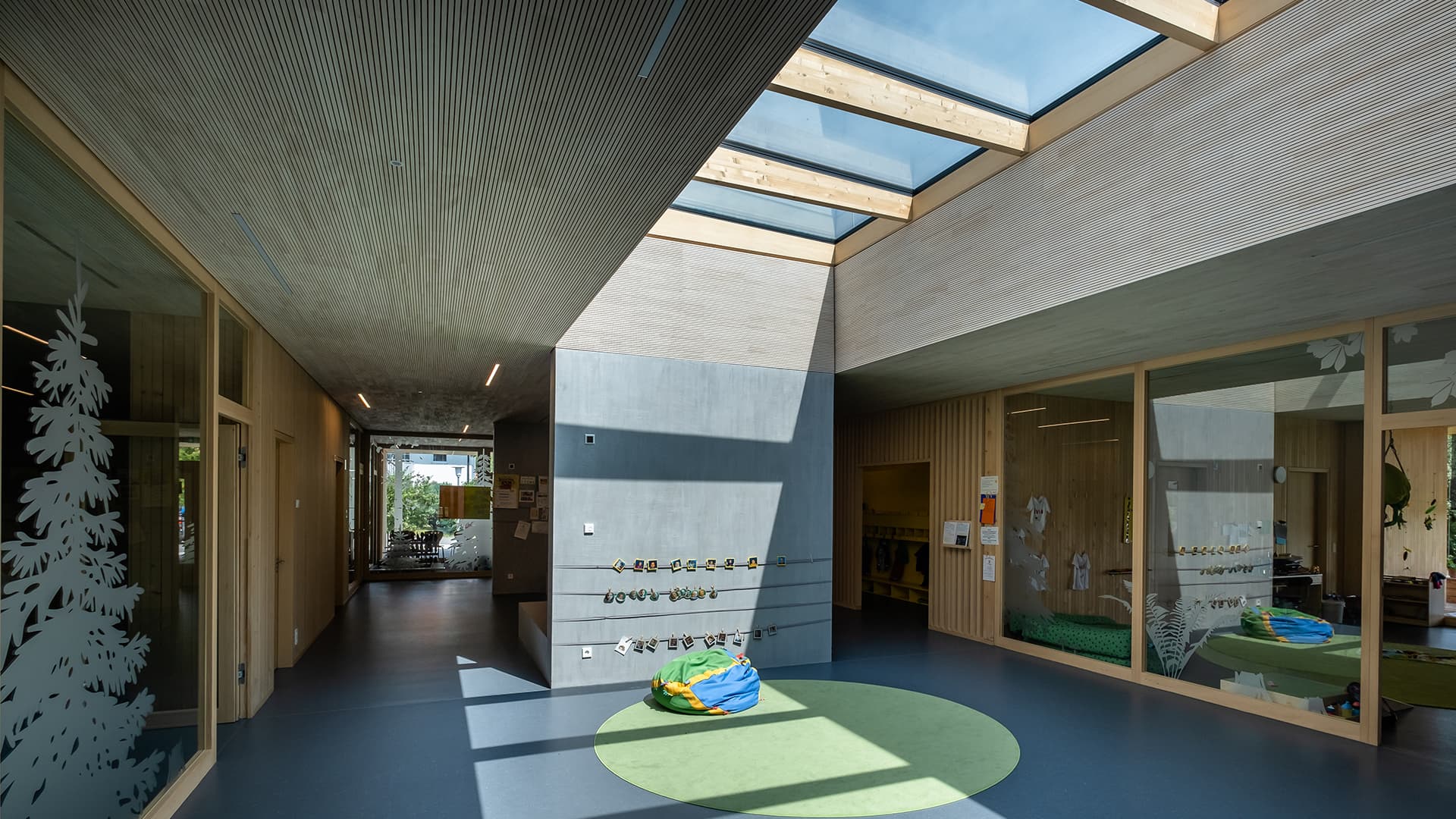
Childcare centers are the most schedule-sensitive buildings we work on in San Antonio. A distribution center can absorb a noisy tear-off; a room of two-year-olds on cots at 12:30 cannot. So before we price anything, we map your day: drop-off surge from 6:30 to 9:00, nap block roughly 12:00 to 2:30, pick-up from 3:30 to 6:00. Demolition, mechanical fastening, and anything involving a compressor gets scheduled outside those windows or pushed to weekends entirely. On the purpose-built centers along Loop 1604, US-281 in Stone Oak, and the Medical Center corridor - where enrollment runs 100-plus children - we typically phase the roof in weekend sections so Monday morning opens with a watertight, debris-free site every time.
Texas HHS Child Care Regulation is the second client on every one of these jobs. Minimum standards require hazard-free premises, and a licensing inspector who finds ceiling stains in an infant room, ponding water breeding mosquitoes, or construction debris reachable from a play yard can write deficiencies that land in your public compliance record - the same record parents check online. Our scopes are written with that in mind: full containment of the work zone, daily magnetic sweeps for fasteners, temporary fencing that keeps ladders and staged material outside any licensed activity space, and photo documentation you can hand an inspector to show the leak that caused a stain has actually been corrected, not just painted over.
The buildings themselves are usually small hybrids - 4,000 to 12,000 square feet with a steep-slope shingle or metal roof over the front office and a low-slope section over classrooms and the kitchen. That flat section takes the worst of San Antonio's climate: 160-170°F surface temperatures in July, UV that chalks out aged mod-bit, and April-June hail that bruises shingles and fractures cap sheets in the same storm. Where the deck is sound and there's only one existing layer, a recover with fleece-back TPO or a reinforced coating system is often the right call - it avoids tear-off noise and odor near children and typically runs 25-40% below full replacement. Where hail has done structural damage, we document it to insurance-carrier standards before anyone touches the roof.
Frequently Asked Questions
- What happens during a roof scope for Daycare & Childcare Facility Roofing?
- We review roof access, the existing system, drainage, penetrations, leak or damage history, and any photos or warranty records you already have. Then we document the repair, replacement, coating, or maintenance path that fits the building and timing.
- How quickly can you look at Daycare & Childcare Facility Roofing in San Antonio?
- For active leaks or storm damage, send the address, photos, access notes, and timeline through the form. Those details help us route the call, prepare the roof walk, and avoid wasting time on the first visit.
- What information helps price Daycare & Childcare Facility Roofing accurately?
- The useful details are roof type, approximate square footage, age, leak locations, access constraints, tenant hours, warranty paperwork, and any insurance or capital planning deadlines. Photos of drains, seams, penetrations, and interior staining help us scope faster.