
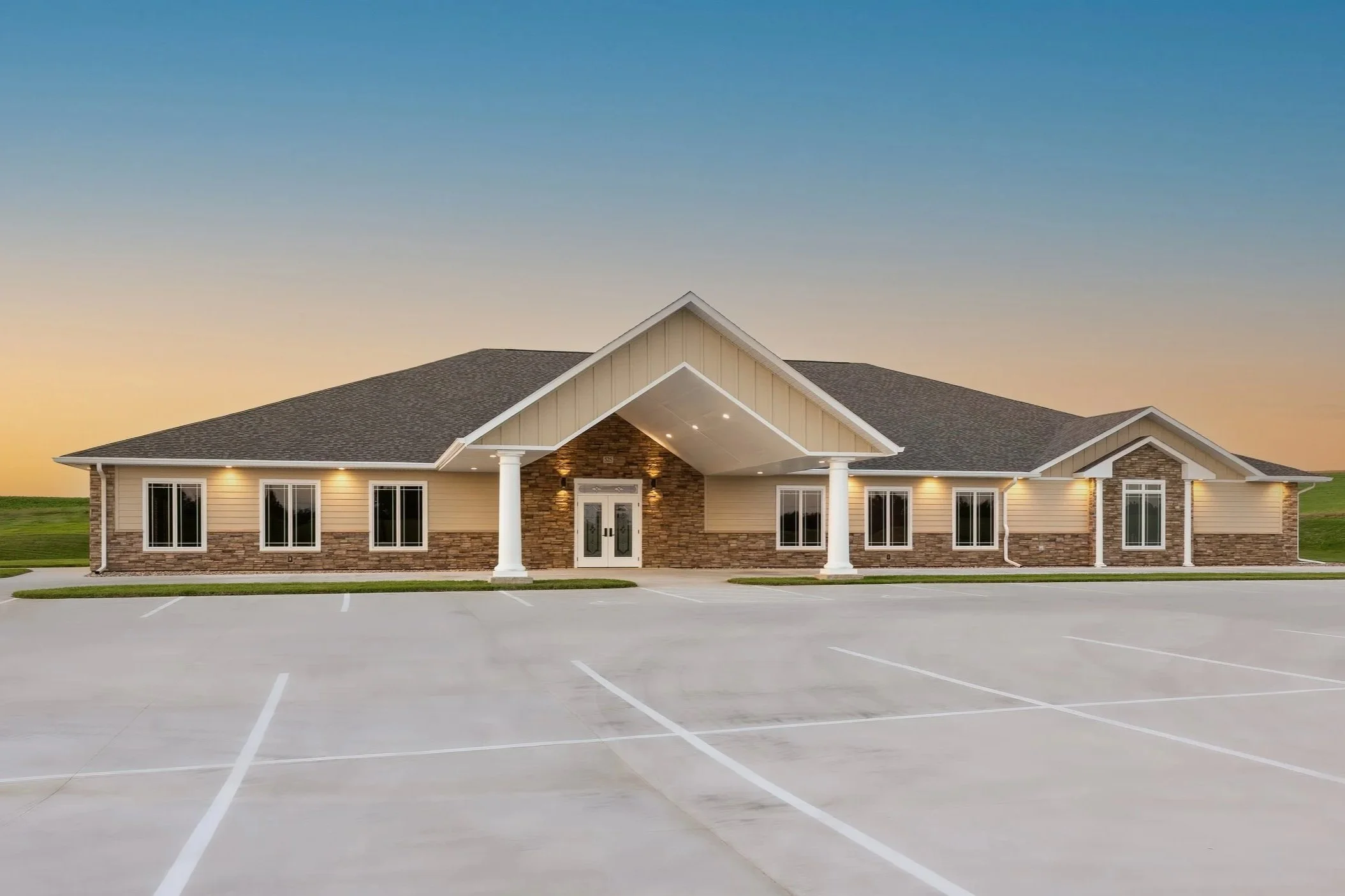
Roofing for San Antonio Funeral Homes and Mortuaries
A funeral home roof carries a requirement most commercial buildings do not: the work cannot intrude on a family's worst day. There is no version of this project where hammering over a chapel during a service is acceptable, and there is no version where a visible patchwork roof reflects well on a business whose entire reputation rests on dignity and composure. We approach a funeral home the way we approach a hospital or a sanctuary, quietly, on the facility's terms, with a finished result that looks like it was always meant to be there.
San Antonio's funeral homes range from long-established family businesses to regional chains, and they sit in every kind of building. The historic operators around downtown, Tobin Hill, and Monte Vista occupy older masonry buildings with built-up roofs on wood or concrete decks. The newer facilities along the 1604 loop, out toward Stone Oak, and across the suburban growth on the South and West sides tend toward low-slope membrane roofs with chapels framed as clear spans. We work across both, and we read each building's roof before we recommend anything.
Quiet Scheduling Is the Whole Job
A funeral home is never really closed. Visitations run into the evening seven days a week, services land on short notice, and the building has to be fully composed whenever a family arrives. So we schedule around the funeral director's calendar, not ours. We take advance notice of services and visitations and sequence the work so active chapel and gathering spaces stay quiet and undisturbed during those hours. The crew stays off the main entry and porte-cochere during services, and we confirm same-day dry-in before the building closes each evening so there is never an exposed roof over an occupied facility overnight.
The Preparation Room Exhaust Cannot Go Offline
The embalming and preparation area runs under negative pressure with continuous rooftop exhaust to contain formaldehyde and other chemical vapors, and that exhaust has to keep running for regulatory compliance and basic safety. It is not something we cap for convenience. We locate the prep-room exhaust stack before mobilization, treat the flashing around it as its own scope item handled with the director's sign-off, and keep the stack operating throughout any work near it. The exhaust runs while we work; the work bends around the exhaust.
Chapel Spans and Older Decks
Funeral home chapels and visitation rooms often span 40 to 60 feet without an interior column, much like a small church sanctuary, and that clear span generates wind-uplift loads that demand a real fastening specification rather than a default pattern. We confirm the deck type, the span, and the existing attachment before we set the system. On the older downtown and Monte Vista buildings, the bigger risk is hidden: a serviceable-looking surface over saturated insulation on an aging built-up roof. We core and run a moisture survey before any recover decision, because covering a wet deck just locks the problem in.
A Roof That Looks the Part
Appearance matters more on this building type than on almost any other we touch. A funeral home's curb presence is part of how families judge whether to trust it, so the visible roof, the parapet caps, the porte-cochere canopy, the street-facing slopes, has to read as crisp and intentional. We detail edge metal and canopy work cleanly and match visible materials to the building's character. The porte-cochere and covered-entry transitions get particular attention, because the canopy-to-building flashing and canopy drains are the most common source of the chronic, embarrassing drip right where guests walk in.
Discretion Through the Whole Project
We keep staging tidy and out of sight lines, keep noise down during service windows, and keep the crew professional and low-profile on a property where families are grieving. The same discretion we bring to occupied hospitals and houses of worship is the standard on every funeral home we work on.
Protecting the Interior That Cannot Be Replaced
Funeral home interiors are not ordinary commercial finishes. Chapels carry millwork, organs, stained glass, draperies, and casework that would be costly and slow to replace and impossible to match quickly when a family is waiting. A roof leak here is not a ceiling-tile swap, it is a threat to irreplaceable furnishings and to the calm the space is supposed to project. That raises the stakes on getting the roof right the first time. We prioritize drainage on these low-slope roofs, because ponding water over a South Texas summer is what quietly ages a membrane into the leak that eventually shows up over a chapel ceiling. On reroofs we typically build positive slope with tapered insulation to move water to the drains and scuppers rather than letting it stand and bake, and we detail the flashings at every penetration so the roof protects what is beneath it for its full service life.
Storm Readiness for an Always-Open Building
Because a funeral home cannot simply close after a storm, it needs a roof that holds up to the hail and high wind that move through South Central Texas every spring, and a contractor who can respond fast when one gets through. We document the roof's condition so there is a clear baseline for any insurance claim, and we keep emergency dry-in available so a sudden leak over an occupied chapel can be stopped before it reaches the finishes below. The goal is a building that stays composed and ready for families no matter what the weather did the night before.
Common Questions From San Antonio Funeral Home Owners
How do you keep the work from disrupting services and visitations?
We schedule against the funeral director's calendar. With advance notice of services and visitations, we sequence the work so active chapel and gathering areas stay quiet during those hours, keep the crew clear of the main entry and porte-cochere during services, and confirm same-day dry-in before the building closes each evening. The building stays composed and watertight whenever families are present.
What do you do about the preparation room exhaust?
We keep it running. The prep-room exhaust has to stay operational for compliance and safety, so we locate the stack before mobilization, handle its flashing as a separate scope item with your sign-off, and keep it operating throughout any nearby work. We never cap or take that stack offline for roofing convenience.
Our chapel has a wide open ceiling, does that affect the roof?
Yes. A clear-span chapel of 40 to 60 feet generates real wind-uplift loads, so we confirm the deck type, span, and existing attachment and engineer the fastening to that condition rather than using a default pattern, similar to how we handle a church sanctuary roof.
Our building is older, can you just recover the existing roof?
Only if it is dry underneath. Older built-up roofs often hide saturated insulation under a surface that still looks intact, so we core and run a moisture survey before recommending a recover. If the deck is wet, recovering it traps the problem, and a replacement is the honest answer.
Will the finished roof and entry canopy look right from the street?
That is a priority on this building type. We detail edge metal, parapet caps, and the porte-cochere canopy cleanly and match visible materials to the building's character, and we give particular attention to the canopy-to-building flashing and drains where chronic leaks tend to show up right at the entrance.
Frequently Asked Questions
- What happens during a roof scope for Roofing for San Antonio Funeral Homes and Mortuaries?
- We review roof access, the existing system, drainage, penetrations, leak or damage history, and any photos or warranty records you already have. Then we document the repair, replacement, coating, or maintenance path that fits the building and timing.
- How quickly can you look at Roofing for San Antonio Funeral Homes and Mortuaries in San Antonio?
- For active leaks or storm damage, send the address, photos, access notes, and timeline through the form. Those details help us route the call, prepare the roof walk, and avoid wasting time on the first visit.
- What information helps price Roofing for San Antonio Funeral Homes and Mortuaries accurately?
- The useful details are roof type, approximate square footage, age, leak locations, access constraints, tenant hours, warranty paperwork, and any insurance or capital planning deadlines. Photos of drains, seams, penetrations, and interior staining help us scope faster.