
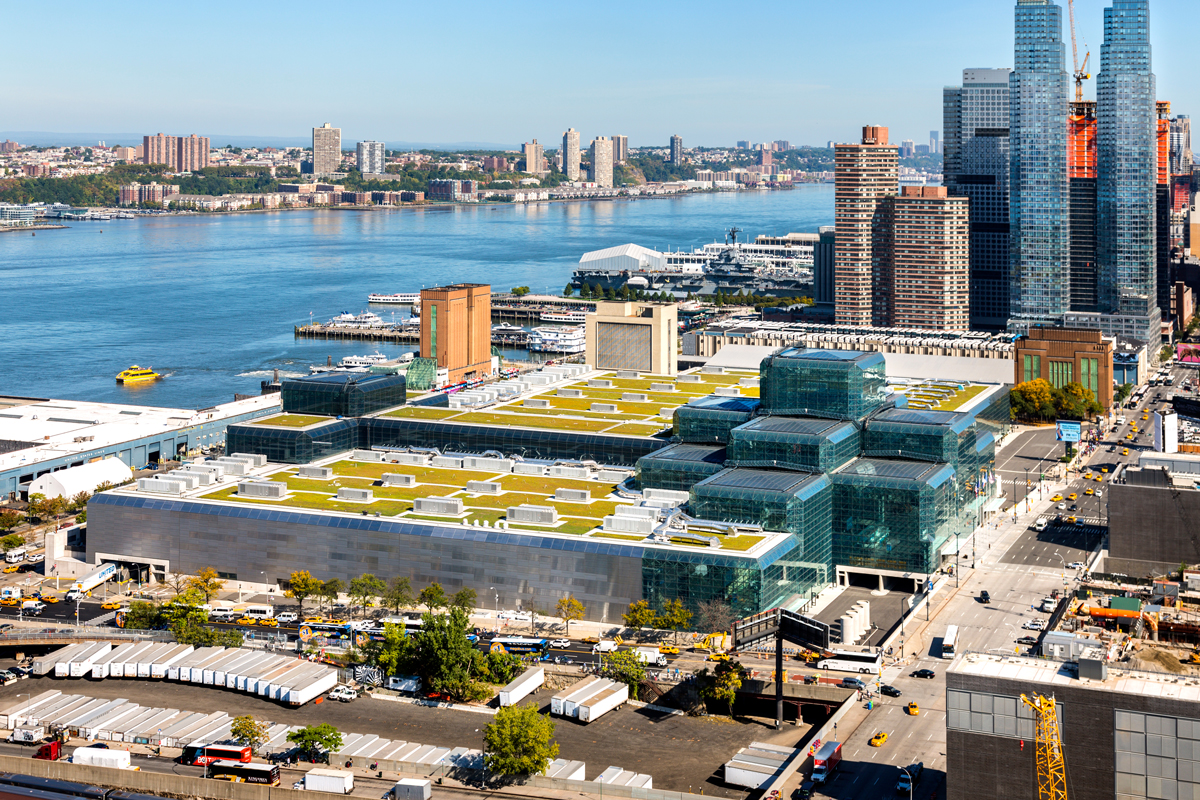
Event facilities are the one commercial category where the roof deadline is set by someone else's wedding date. San Antonio runs deep on this inventory - banquet halls and quinceañera venues strung along Loop 410 and IH-35, converted industrial event spaces near the Pearl and Southtown, and expo-scale buildings that take their cues from the Henry B. González Convention Center's 514,000 square feet of exhibit space downtown. Almost all of it is low-slope: TPO, mod-bit, or aging built-up over steel deck, with long open-span sections and rooftop units clustered over kitchens and back-of-house. When we scope one of these roofs, the first document we ask for isn't the last repair invoice - it's the booking calendar for the next six months.
What makes venue roofs unforgiving is what hangs underneath them. Ballrooms and exhibit halls carry acoustic ceiling clouds, drape tracks, chandeliers, rigging points, and finished drywall soffits directly below the deck - so a pinhole leak that a warehouse owner would bucket for a month becomes stained acoustic tile and a drip over a head table. Water travels along deck flutes and shows up 40 feet from the actual breach, usually above the one room booked that weekend. Our leak diagnostics on these buildings lean on moisture scans and deck-side tracing rather than guesswork, because opening a finished ceiling to hunt a leak costs more than the roof repair itself and takes the room out of inventory while it's open.
The repair-versus-recover-versus-replace decision runs differently for venues too. A full tear-off means days of open deck, odor, and noise a booked facility cannot absorb, so where the existing roof is dry and there's only one membrane layer down, we push hard toward a recover - code allows one - or a fluid-applied coating that restores the surface with no tear-off at all. San Antonio's April-through-June hail corridor matters here: after a convective storm we document venue roofs panel by panel for the insurance file, because carriers scrutinize claims on buildings with high interior finish values. Either way, the work gets phased in sections, dried-in every night, and sequenced against the event schedule in writing before the first crew shows up.
Frequently Asked Questions
- What happens during a roof scope for Event Venue & Convention Center Roofing?
- We review roof access, the existing system, drainage, penetrations, leak or damage history, and any photos or warranty records you already have. Then we document the repair, replacement, coating, or maintenance path that fits the building and timing.
- How quickly can you look at Event Venue & Convention Center Roofing in San Antonio?
- For active leaks or storm damage, send the address, photos, access notes, and timeline through the form. Those details help us route the call, prepare the roof walk, and avoid wasting time on the first visit.
- What information helps price Event Venue & Convention Center Roofing accurately?
- The useful details are roof type, approximate square footage, age, leak locations, access constraints, tenant hours, warranty paperwork, and any insurance or capital planning deadlines. Photos of drains, seams, penetrations, and interior staining help us scope faster.