
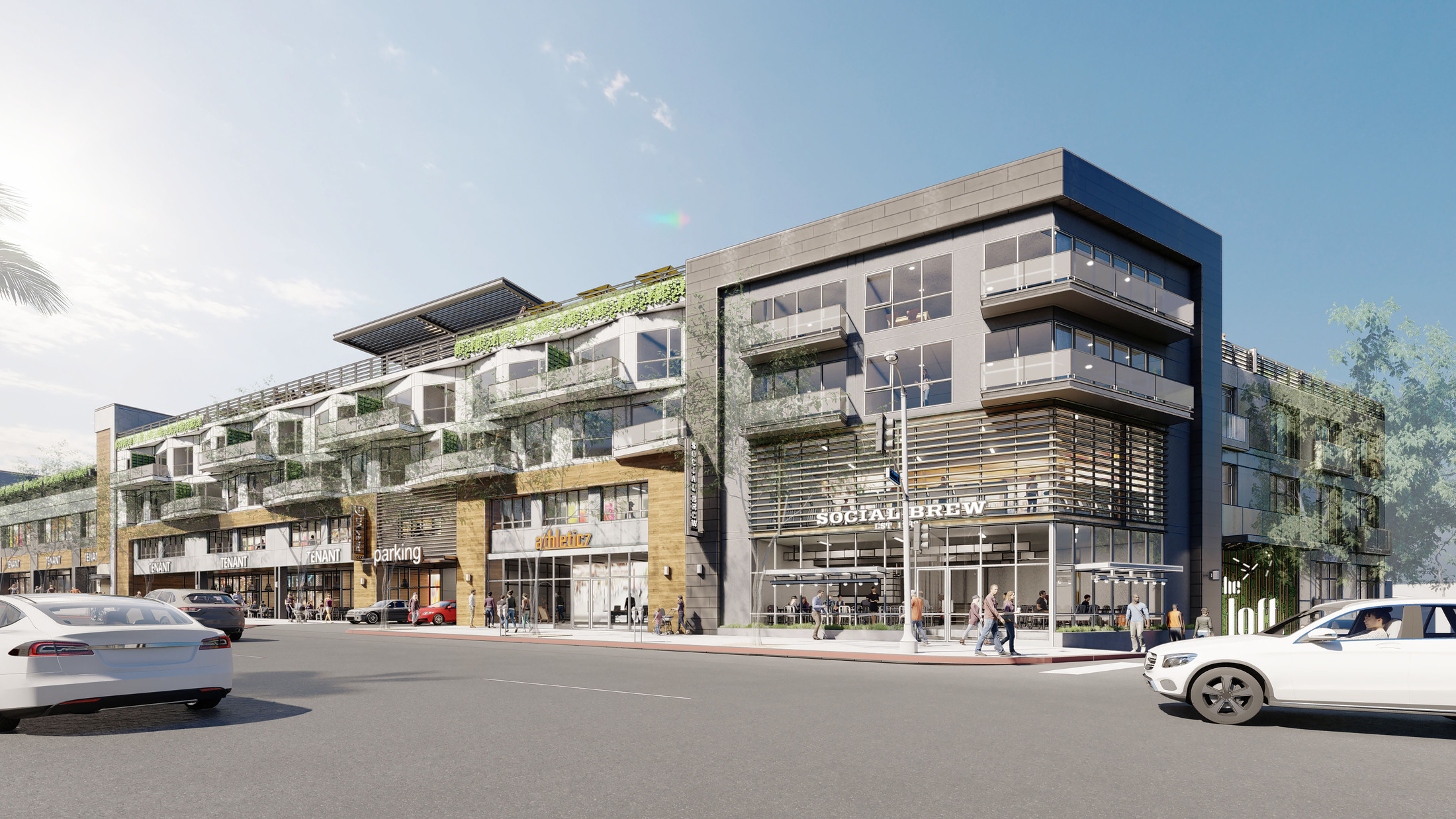
Mixed-Use Development Roofing in San Antonio, TX
San Antonio's mixed-use development has accelerated dramatically along the Pearl District, the Southtown arts corridor, and the Broadway Cultural Corridor, where adaptive reuse of historic industrial buildings blends with purpose-built podium towers. These projects - stacking bodegas, breweries, and galleries at street level with condominiums and boutique offices above - present roofing challenges that demand familiarity with both historic fabric and modern waterproofing science. The Pearl's warehouse-scale roofs, for instance, combine original timber decking with contemporary TPO overlays, requiring careful moisture analysis before any new membrane is committed to the existing substrate.
San Antonio's subtropical climate delivers punishing ultraviolet exposure and summer heat that regularly pushes roof-surface temperatures above 160°F. On mixed-use buildings in the Pearl and Southtown districts, cool-roof membranes are both an energy-efficiency strategy and a code compliance requirement under the San Antonio City Public Service utility rebate program. White TPO and polyurethane foam systems with highly reflective coatings dramatically reduce cooling loads for the residential floors above commercial retail space, which is especially important when ground-floor restaurants operate exhaust equipment that adds heat to the building envelope. Commercial roofers who understand how to layer these systems correctly earn repeat contracts from the developers who track energy performance across their portfolios.
Hurricane-season wind events and intense convective storms are a defining weather reality for San Antonio's roofing industry. While the city sits far enough inland to avoid direct hurricane landfall, tropical remnants regularly produce wind gusts exceeding 70 mph and rain rates that overwhelm standard drain calculations. On mixed-use rooftop amenity decks near the San Antonio River Walk area, drainage must be engineered for worst-case tropical rainfall intensity, not just annual average precipitation. Scupper sizing, secondary overflow capacity, and membrane termination heights at parapet walls all require conservative assumptions when the building sits in a tropical storm trajectory corridor.
The mixed-use projects along the Broadway Cultural Corridor highlight the importance of coordinating between historic preservation guidelines and modern waterproofing systems. San Antonio's historic district overlay zones restrict visible alterations to rooflines, which limits the profile of parapet enhancements and rooftop equipment enclosures. Commercial roofers working in these zones must specify low-profile membranes and equipment curbs that keep the roofline below the review threshold while still achieving code-required waterproofing performance. That balance between regulatory compliance and technical performance is a niche skill that separates general contractors from specialists.
Noise attenuation in San Antonio mixed-use developments is complicated by the city's vibrant nightlife culture. A mixed-use building in Southtown may have a live music venue or late-night bar on the ground floor and residential tenants directly above. Roof assemblies that isolate impact noise and airborne sound from mechanical equipment - roof-level AC systems serving the venue, exhaust fans, refrigeration compressors - require mass and decoupling strategies integrated into the roofing assembly from the structural slab upward. San Antonio commercial roofers who collaborate with acoustic consultants during design, rather than after complaints arrive, save owners from the retrofits that dominate post-occupancy construction defect claims.
Green roofs in San Antonio's climate require species selection and irrigation design adapted to the region's drought-prone summers. The Pearl Brewery complex pioneered rooftop green space in San Antonio, and subsequent mixed-use projects across the near-north side have followed suit. Below the growing medium, however, the waterproofing assembly must be root-barrier-rated and tested under the specific thermal and moisture conditions San Antonio imposes. The combination of standing summer heat and winter freeze events - though mild by northern standards, San Antonio does experience sub-freezing nights - creates a membrane stress cycle that generic specifications underestimate.
Multi-stakeholder roofing projects are commonplace in San Antonio's mixed-use sector. The city's strong incentive programs for transit-oriented development near the VIA Metropolitan Transit bus rapid transit corridors attract developer partnerships that often involve the city as a land partner, a private developer, and a nonprofit affordable housing component. When three ownership entities share a roofline, the roofing contractor must produce warranty documentation, maintenance responsibility matrices, and access protocols acceptable to all parties. Commercial roofers who have navigated similar multi-party transactions on the near-east side redevelopment projects understand the paperwork as well as the physical installation.
Long-term maintenance planning is especially important for San Antonio mixed-use buildings because the high UV exposure and frequent storm events accelerate membrane aging compared to more temperate markets. A 20-year TPO membrane in San Antonio realistically requires a restoration coat or overlay at year 12 to reach the end of its warranted life. Building managers who schedule those mid-life interventions avoid the emergency re-roofing projects that disrupt retail tenants and residential occupants alike. Commercial roofing firms that offer long-term service agreements with annual infrared inspections and documented maintenance logs add measurable value to San Antonio mixed-use assets.
San Antonio's continued growth - fueled by military installations, healthcare expansion, and a booming hospitality sector - sustains demand for mixed-use development across the inner city and along corridors connecting downtown to the medical center and university districts. Each new project tests the commercial roofing trade's capacity to handle complex use transitions, multi-stakeholder documentation, and the specific environmental pressures of South Texas. Contractors who invest in those capabilities, who understand the Pearl District's historic overlay requirements as well as they understand heat-welded membrane seam tensile strength, are the firms that define the standard for the next generation of San Antonio mixed-use development.
Frequently Asked Questions
- What cool-roof options are available for San Antonio mixed-use buildings that also want rooftop amenity space?
- Traffic-bearing polyurethane systems with reflective topcoats satisfy both the cool-roof performance requirement and the occupancy load demands of a rooftop deck. They are applied as a seamless liquid system that bonds to concrete podium decks and accepts paver overlays or synthetic turf without losing waterproofing integrity. San Antonio CPS Energy rebate programs accept these systems when verified reflectance measurements meet the SRI threshold required for commercial applications.
- How should mixed-use roofs in the San Antonio historic districts be documented for the preservation review board?
- The review package typically requires before-and-after photographs from street-level vantage points confirming that no new rooftop elements are visible above the parapet. Specifications for low-profile curbs, non-penetrating ballasted equipment frames, and membrane termination details at historic masonry parapets should accompany the application. Commercial roofers who have completed previous projects in the overlay zone can often expedite review by referencing approved precedents.
- How do San Antonio's tropical storm remnants affect roof drainage design on mixed-use podium decks?
- Rainfall intensity data for tropical remnant events in Bexar County routinely exceeds the 10-year design storm values used for standard drain calculations. Commercial engineers in San Antonio add a 25-percent safety factor to primary drain sizing and require secondary overflow scuppers capable of passing the 100-year storm flow without exceeding the structural live load of standing water. That conservatism adds minimal material cost but prevents catastrophic structural overload during infrequent high-intensity events.
- What fire-rated assembly requirements apply to San Antonio mixed-use buildings at the commercial-residential interface?
- Texas building code requires a two-hour fire-rated separation between commercial occupancies and residential uses directly above, and the roof-ceiling assembly at the podium level must carry a listed assembly rating tested to UL or FM standards. Roofing contractors must coordinate with the general contractor to ensure the roof deck, insulation, and membrane combine into a listed assembly rather than an unlisted combination of individually approved products. Third-party fire protection consultants can expedite the selection process on projects with unusual structural configurations.
- How frequently should San Antonio mixed-use building owners inspect their commercial roofs?
- Given the UV intensity and storm frequency in South Texas, twice-yearly inspections - before hurricane season and after the winter storm risk period - are the minimum for responsible asset management. Buildings with active rooftop decks, heavy HVAC loads, or older membrane systems should add an annual infrared scan to identify wet insulation before it creates interior damage. Proactive maintenance budgets that address minor blistering, seam separation, or drain fouling in the first year extend membrane service life significantly.