
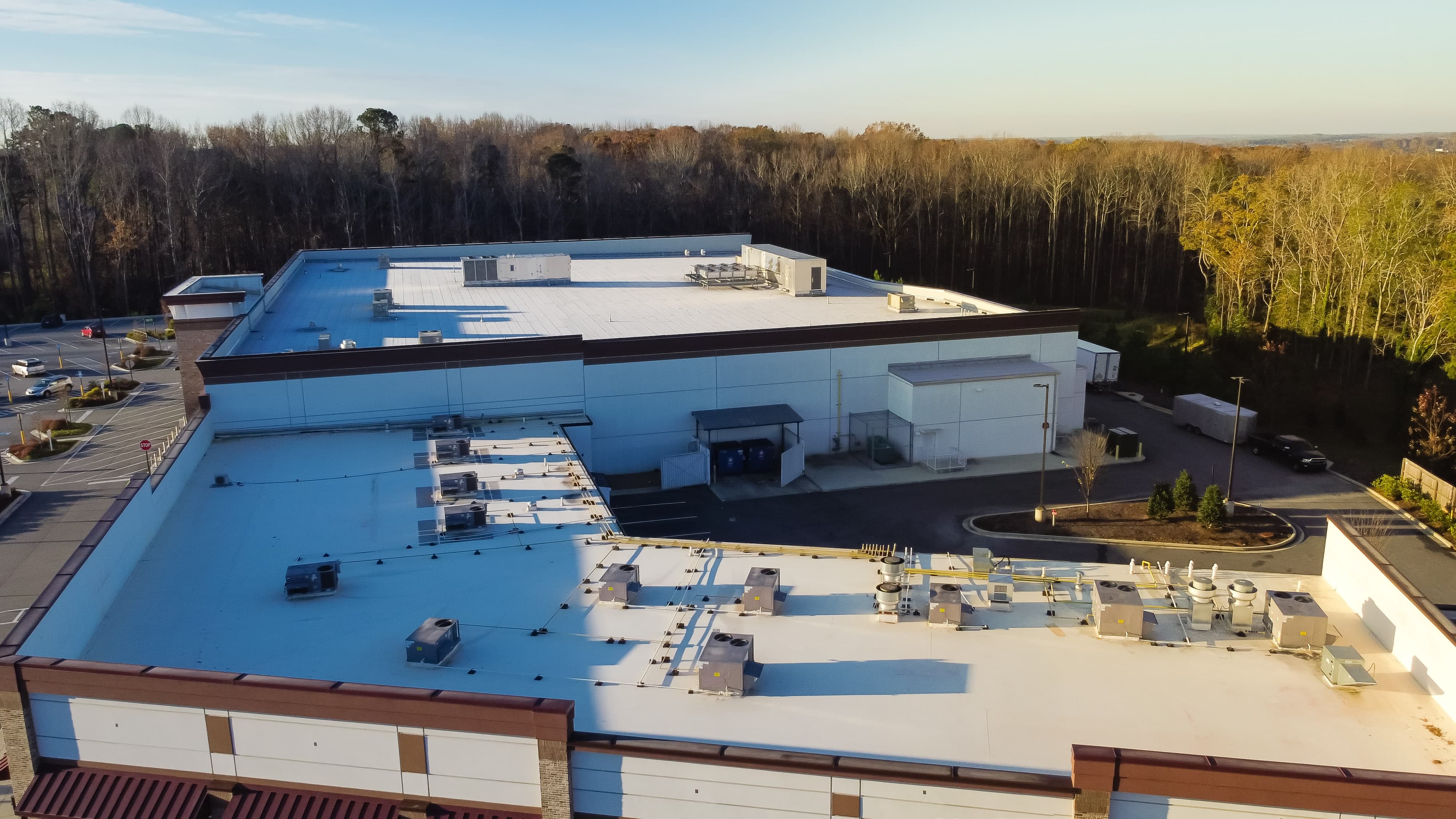
Drive any arterial in this market - Loop 410, IH-35 through the north corridor, US-281, IH-10 heading toward Boerne - and you pass a fuel station every mile or two. San Antonio is one of the most competitive c-store markets in the country, with local and regional chains fighting for the same hard corners alongside independents. The roof profile is remarkably consistent: a compact low-slope roof over the store, usually TPO, mod-bit, or an aging built-up system, plus a separate steel fuel canopy with its own metal deck and drainage. The store roof is small, but it is one of the busiest small roofs in commercial real estate - cooler condensers, exhaust fans, kitchen hood vents on stores with food service, satellite and security equipment, all packed onto three or four thousand square feet.
The walk-in cooler and freezer boxes are where most c-store leaks start and where they do the most damage. Refrigeration lines, condensate drains, and electrical penetrations cluster through the roof directly above the coolers, and the original pitch pans and boots rarely get maintained after the equipment contractors leave. Water tracking down a refrigeration line ends up inside the cooler ceiling, where it shorts controls, ices up, and puts product at risk. When we scope a c-store roof, we photograph and document every penetration individually, because the fix is usually targeted - new boots, reworked pitch pockets, a reinforced membrane target patch - rather than wholesale replacement. On roofs past 15-18 years with saturated insulation confirmed by core cuts, we price a recover versus tear-off honestly; most single-layer c-store roofs qualify for a recover, which keeps the store open and cuts cost roughly 25-35 percent.
Fuel canopies are a separate scope with separate risks. April-June hail in this corridor dents canopy deck pans, tears sealant at the fascia, and opens seams that drip onto dispensers - a slip hazard and a canopy-lighting electrical problem. Canopy work over active fuel islands requires coordination with the operator on island shutdowns, hot-work restrictions near vent stacks, and staging that never blocks fuel deliveries. For portfolio owners running eight or fifteen sites across Bexar County, we set up a standing account: one documented condition report per roof, a ranked repair budget across the portfolio, and a 24/7 dispatch commitment, because a c-store cannot wait until Monday with water over the point-of-sale counter.
Frequently Asked Questions
- What happens during a roof scope for Convenience Store Roofing?
- We review roof access, the existing system, drainage, penetrations, leak or damage history, and any photos or warranty records you already have. Then we document the repair, replacement, coating, or maintenance path that fits the building and timing.
- How quickly can you look at Convenience Store Roofing in San Antonio?
- For active leaks or storm damage, send the address, photos, access notes, and timeline through the form. Those details help us route the call, prepare the roof walk, and avoid wasting time on the first visit.
- What information helps price Convenience Store Roofing accurately?
- The useful details are roof type, approximate square footage, age, leak locations, access constraints, tenant hours, warranty paperwork, and any insurance or capital planning deadlines. Photos of drains, seams, penetrations, and interior staining help us scope faster.