
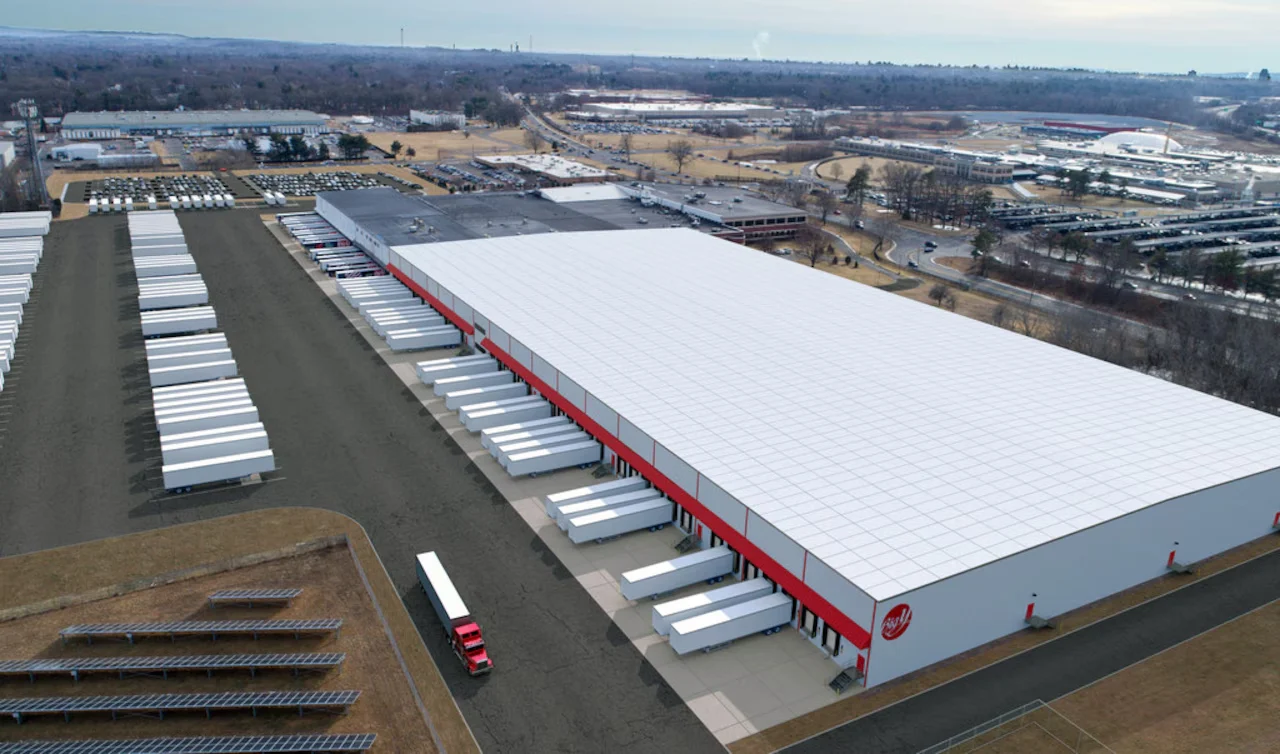
The San Antonio metro's distribution center inventory is concentrated along IH-35 from the Loop 410 interchange south toward the IH-37 split, and along IH-35 North through Schertz and Selma toward New Braunfels. Amazon's ROC8 fulfillment center in Schertz is one of the highest-profile logistics buildings in the market - a million-plus sq ft building that operates 24 hours, seven days a week, with inbound and outbound carrier traffic that does not pause for a roofing project. The FedEx South Texas Hub on Connally Loop near the San Antonio International Airport is another continuous-operation facility where roofing scheduling has to work around sort operations that run through the night.
Port San Antonio on the former Kelly AFB adds the port campus distribution buildings to the inventory - bonded warehouse facilities, cargo handling buildings, and logistics buildings that serve the aerospace, defense, and international trade tenants on the campus. These buildings are different from the IH-35 corridor big-box distribution centers: smaller footprint, more complex tenancy, and security and access requirements specific to the port campus.
Our project managers have scoped and executed roofing work on large-format distribution buildings in this market. The production planning on these buildings is the hardest part - not the membrane specification, which is almost always 60-mil or 80-mil TPO on a large, flat metal-deck roof. The challenge is fitting a roofing production crew into a logistics operation without creating a safety conflict between roofing crews and forklift and carrier traffic.
Large-Format Production Planning
A 500,000 sq ft distribution center roof replacement is a 12 to 16 week project, start to finish, when the building operates 24/7. We plan production in dock-clear zones - areas of the roof above dock sections that are inactive during specific shift windows. On Amazon ROC8-type buildings, the inbound dock is active during day shift and the outbound dock is active during night shift; crane placement above each dock section is coordinated against that shift pattern so crane lifts never occur above an active dock approach.
Material delivery to the roof is planned with the facility's logistics team. A distribution center with active carrier traffic at 50 or more dock doors cannot accommodate a flatbed delivering roofing materials to a parking area that conflicts with carrier lane assignments. We coordinate delivery timing, staging location, and crane placement with the facility manager's logistics coordinator - not just the facilities manager - before mobilization.
Tear-off sequencing on a 24/7 operation uses 15,000 to 25,000 sq ft sections per day, each dried in before the shift that occupies the building section below that area. We do not schedule tear-off above an active sort aisle or above conveyor equipment that cannot tolerate any water intrusion risk. The sequencing plan is reviewed with the facility's operations team and the facilities manager before the first crew arrives on site.
IH-35 Corridor - Building Inventory and Common Conditions
The IH-35 South corridor between Loop 410 and the Toyota plant on Applewhite carries a dense distribution center inventory built in the 1990s through early 2010s. Most of these buildings are first or second-generation TPO or modified bitumen on metal deck, concrete tilt-up wall construction, and clear-span interiors of 28 to 36 feet clearance height. The roofs on the 1990s-vintage buildings in this zone are running 25 to 30 years of age - which puts them at or past the end of their design life on almost any membrane system.
Ponding water is a recurring issue on older IH-35 corridor distribution centers. Low-slope roof design combined with settling of the concrete slab (on expansive clay soils in some areas of the south corridor) creates drainage patterns that were not in the original construction design. We document ponding areas during inspection and design tapered insulation packages that address the drainage pattern - or flag ponding explicitly if the cost of eliminating it exceeds what the owner wants to invest.
Building insulation on the IH-35 South corridor distribution centers was often not installed to current Texas energy code levels - many of the pre-2010 buildings have minimal insulation, which affects both energy costs and the summer heat load on the interior. A roof replacement is the right time to bring the insulation assembly up to current IECC levels, and we include an insulation upgrade cost line in our proposals so the owner can make an informed decision at scope time rather than after the membrane is already down.
Amazon, FedEx, and National Account Coordination
National logistics operators - Amazon, FedEx, UPS, and their third-party logistics partners - often manage roofing through national facilities management programs that have specific contractor qualification requirements, proposal formats, and approval chains. Amazon's facility management for ROC8 in Schertz may route through a regional facilities manager and a national procurement team before a local roofing contract is approved.
We are familiar with the facilities management structures at major national logistics operators. If your building is Amazon- or FedEx-occupied, let us know at the first conversation - we will produce the scope and proposal documentation in the format their facilities management program requires and can communicate through whatever approval chain their FM program uses.
FedEx South Texas Hub on Connally Loop near the airport operates through continuous sort operations - the building does not have a true off-peak window. We have planned roofing production around sort schedules on continuous-operation facilities before and can produce a production plan that works around the 2 AM to 6 AM trough window that most hub sort operations have.
Frequently asked questions
How do you manage crane placement on a 24/7 distribution center without shutting down dock operations?
By coordinating crane placement with the facility's logistics coordinator and the facilities manager before mobilization. We identify the dock sections with the lowest outbound or inbound activity during the planned crane window and stage the crane above those sections. We do not lift loads across active dock approaches. The crane placement plan is reviewed and approved by the facility operations team before any equipment moves on site.
Can you work on Amazon, FedEx, or other national logistics facilities?
Yes. We carry the insurance certificates and can If the facility routes through a national facilities management program, we can communicate through that program's approval chain. Let us know the facility operator at the first conversation so we can confirm the qualification path before spending time on a scope the FM program will not approve.
What is the typical production rate on a large distribution center roof?
On a 24/7 facility with San Antonio summer heat restrictions, plan for 12,000 to 20,000 sq ft per day of combined tear-off and dry-in during the 6 AM to noon production window. June and September allow longer days - up to 8 hours of productive time - which increases the daily output. July and August restrict production to the morning window. For a 300,000 sq ft building, full tear-off and replacement runs 8 to 12 weeks under normal summer conditions.
Distribution center roofing scope in San Antonio?
Our project managers will walk
Request a Roof Scope