Third-Party Quality Inspection for Commercial Roofing in San Antonio
Capabilities

Third-Party Quality Inspection for Commercial Roofing in San Antonio

Independent quality inspection during or after another contractor's commercial roofing installation in San Antonio - installation defect documentation, warranty compliance verification, and punch-list generation.

Scope Type
Capabilities
Location
San Antonio, TX
Status
Scheduling Roof Walks
Focus
Photos, written findings, priority ranking, budget timing, and owner-ready documentation.

When a commercial roofing contractor finishes a project and hands the owner a closeout package, two other parties also inspect the work: the contractor's own quality control personnel (who work for the contractor) and the manufacturer's field representative (who works for the manufacturer). Neither of those inspections is performed from the building owner's perspective. Both parties have an interest in the project passing inspection, and neither is paid to advocate for the owner's long-term interests.

A third-party quality inspection is performed by someone with no stake in the outcome - not bidding future work with the contractor, not dependent on the manufacturer's warranty registration for their revenue, and not trying to get the project closed quickly so they can move to the next job. We perform these inspections across San Antonio's commercial roof inventory, from the medical campus buildings near the South Texas Medical Center to the distribution facilities in the IH-35 South corridor to the downtown hospitality properties on the Riverwalk.

The inspections we conduct are adversarial in the best sense - we are actively looking for what does not

What a Third-Party Inspection Covers

Membrane installation: We probe-test seam welds throughout the roof - not just the areas the contractor's quality control checked. Seam testing with a round-tipped probe is the only reliable field method for detecting cold welds, and cold welds are the most common single source of TPO and PVC roof failures in San Antonio's heat. We also verify membrane thickness at several points using a calibrated gauge - delivered membrane that is 55-mil when the spec calls for 60-mil is a real and recurring problem.

Flashing details: Every penetration, parapet, and drain is checked against the manufacturer's published flashing details. We photograph each flashing against the detail sheet and document any deviation. Unauthorized custom details - field fabrications that deviate from the manufacturer's specification - void the warranty at those locations. They are also usually the locations that fail first.

Insulation and attachment: Where accessible through deck inspection ports or at edge terminations, we verify insulation thickness and type against the specification. Fastener pattern is verified by counting fasteners in a sample area and comparing to the specified density. An under-fastened roof may not leak on the day it is installed, but it will fail in the first significant wind event - San Antonio's Hill Country gap winds produce sustained conditions that test fastener patterns.

Drainage: We verify that all drains are clear, that overflow scuppers are at the correct elevation relative to the finished membrane, and that there are no ponding areas created by the installation. New ponding areas on a freshly installed roof are a scope problem, not a maintenance problem - they should be corrected before the project is accepted.

Inspection Timing and Reporting

Mid-production inspection is the highest-value timing. If we can inspect while the contractor is still actively installing, defects that are caught can be corrected before they are welded over or covered by additional material. A seam pattern error caught on day three of a three-week installation can be repaired in an afternoon. The same error discovered at closeout requires cutting out and re-welding a significant section of completed work - which creates its own warranty complications.

Closeout inspection is the standard engagement for owners who do not engage until after the contractor has submitted a completion notice. We conduct a full roof walk, a full seam probe survey, a full flashing detail review, and a drainage check, and we produce a punch-list of items that must be corrected before we recommend acceptance. The punch-list is written in the contractor's specification language - we document the specific detail or test result that demonstrates non-compliance, not a general observation.

Post-winter or post-event inspection is sometimes requested on projects that completed in the prior year and have since experienced a severe weather event. Uri-type freeze events and major hail events can reveal installation defects that were not detectable at the time of installation - thermal cycling that cracks a marginally adequate seam weld, or hail that dents a cover board and reveals inadequate thickness. We document these findings in the context of the original installation specification.

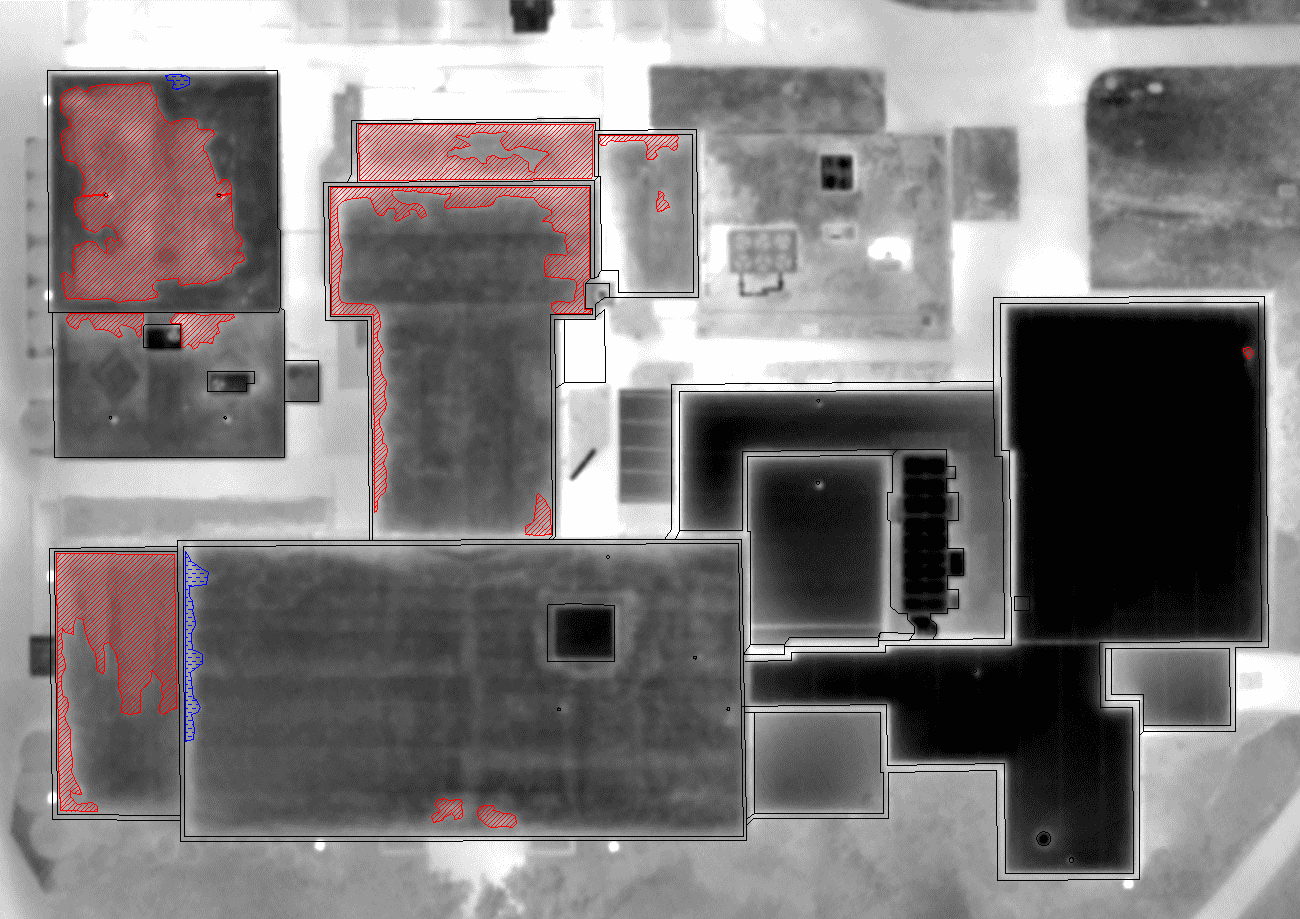
Every inspection produces a written report with photographs keyed to a roof zone diagram. The report is specific enough to support a warranty claim, a contractor dispute, or a property acquisition disclosure requirement.

Common Defects We Find in San Antonio

Seam cold welds are the most common finding on TPO installations in the San Antonio market. High midday temperatures cause installers to rush production into the cooler morning hours, and seam welds made when the substrate or membrane surface is still damp from overnight humidity can produce bond failures that are not detectable to the eye but fail under probe testing. We find cold welds on every third or fourth project we inspect in this market.

Parapet flashing height violations are common on buildings where the parapet height is at or near the minimum specified by the membrane manufacturer. Some manufacturers require a minimum 8-inch membrane height above the finished roof plane at all parapets. San Antonio buildings with low masonry parapets - particularly in the older stock on the East Side and in the IH-35 South corridor - sometimes have parapets that barely

Insulation substitution is occasionally encountered. The specified insulation product is replaced with a different product at similar thickness but different R-value or cover board weight. The difference is not visually detectable after installation and only emerges when the warranty application is cross-checked against the specification. We check manufacturer lot documentation against the specification at every closeout inspection.

Frequently asked questions

When should we schedule the inspection - during production or at closeout?

Both, if possible. A mid-production inspection catches seam and flashing defects while correction is still straightforward. A closeout inspection catches everything the contractor submitted as complete. If you can only do one, mid-production on a large project is usually the higher-value engagement.

The contractor says their work passed the manufacturer's warranty inspection. Do we still need a third-party inspection?

The manufacturer's field inspection verifies that the installation qualifies for warranty registration - it is not a comprehensive quality audit conducted in the owner's interest. We regularly find defects on projects that have passed manufacturer warranty inspection. The two inspections serve different purposes.

What happens if the punch-list items are disputed by the contractor?

Our reports document each finding with photographs, probe test results, and the specific specification or detail sheet that demonstrates non-compliance. The documentation is specific enough to be used in a contract dispute if necessary. We do not characterize defects as matters of opinion - we reference the specification language.

We are in Schertz or New Braunfels - do you cover those areas?

Yes. Our inspection coverage extends across Bexar, Comal, and Guadalupe Counties. Schertz and New Braunfels are within our regular inspection territory - we run routes through those areas routinely.

Get an independent inspection before you accept the project.

We conduct the inspection from your perspective - not the contractor's, not the manufacturer's. Call 210-985-8160 or use the form to schedule.

Request a Roof Scope

Need Third-Party Quality Inspection for Commercial Roofing in San Antonio?