
Insulation saturation is the hidden variable in every commercial roof scope. A roof that looks recoverable from the surface - no visible membrane failures, no active leaks - can have 30 to 50 percent of its insulation area saturated from years of slow moisture intrusion. Recovering that roof with a new membrane traps the moisture, voids the warranty, and produces a system that will fail within three to five years. Tearing it off and replacing the insulation is the correct scope - but it costs more than a recover, and the decision needs to be justified with data.
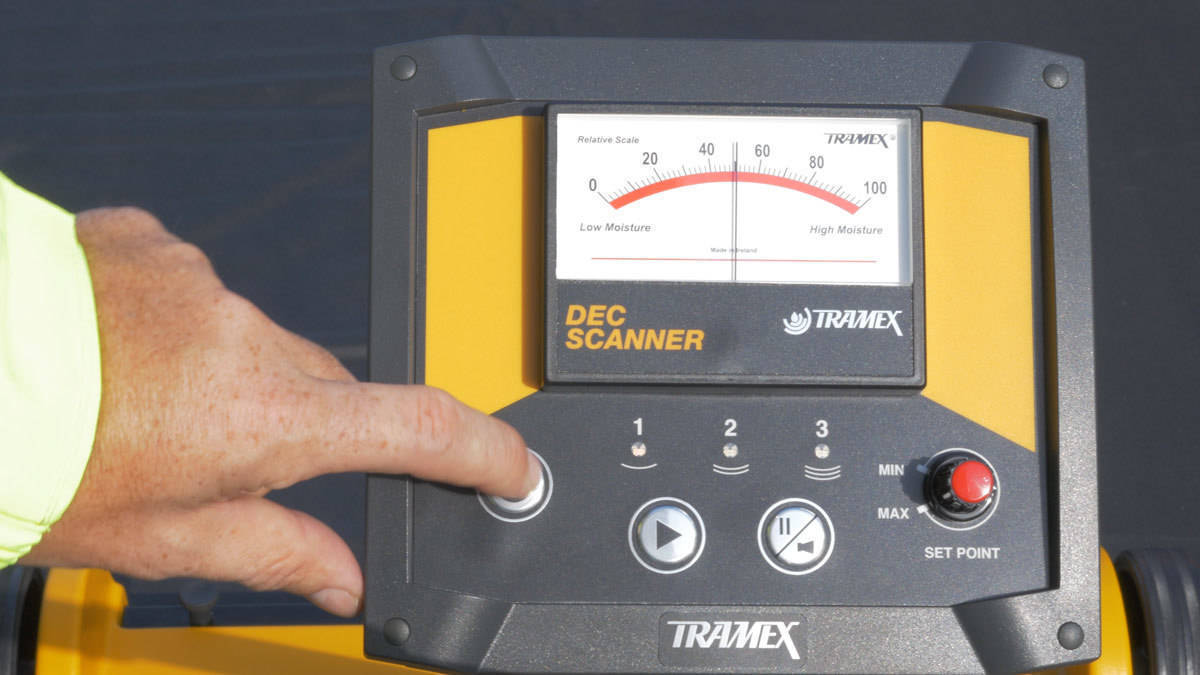
Moisture survey services are how we generate that data. We use core sampling as the primary protocol for San Antonio commercial roofs - pulling two-inch diameter cores at representative locations across the roof surface and evaluating the insulation condition directly. For large roof surfaces or for roofs where the moisture pattern is suspected to be irregular, we supplement core sampling with infrared thermal scanning to map the moisture distribution before we determine the final core sampling pattern.
At Commercial Roofers of San Antonio, I conduct moisture surveys as a standalone service - not as a preliminary step that is automatically followed by a replacement proposal from the same company. The survey produces a moisture distribution map and a written recover-versus-replace recommendation. The owner can use that recommendation to evaluate any contractor's proposed scope, not just ours.
Core Sampling Protocol - How We Pull Cores and What We Evaluate
Core locations are selected based on the roof's drainage pattern, the observed leak history if the owner has records, and the locations of visible surface anomalies - blisters, depressions, tide line patterns, and areas of soft feel underfoot. We pull a minimum of five cores on roofs under 20,000 sq ft and add one core per 5,000 sq ft on larger roofs, with additional cores in suspected high-saturation areas.
Each core is pulled with a two-inch diameter coring tool through the membrane and insulation to the deck. We photograph and measure the core sample. Dry insulation has the color, texture, and weight appropriate to the insulation type. Wet insulation is discolored, heavier, and compresses differently under handling. Saturated insulation is visibly wet and may show biological growth on the deck side. Each core is rated dry, damp, or wet and logged on the core location diagram.
After sampling, each core location is patched with a compatible membrane cap and mastic - the roof remains watertight after the survey. The core patch is photographed and logged so the location is documented for future inspection reference.
Moisture Distribution Mapping - What the Data Produces
The moisture distribution map overlays the core results on the roof zone diagram. Dry cores are plotted in one color, damp in another, wet in a third. The pattern that emerges tells the story of how moisture has moved through the insulation - and often identifies the entry points that the membrane damage alone would not have revealed.
San Antonio's commercial roof inventory has specific moisture patterns worth noting. Older modified bitumen roofs on the IH-35 industrial corridors frequently show saturation concentrated around drain basins - the drain collar fails slowly, moisture enters around the drain collar, and wicks outward through the insulation in a circular pattern centered on the drain. TPO roofs with failed seam welds show moisture intrusion along the seam run, which produces linear saturation patterns rather than basin patterns. Identifying the pattern helps diagnose the entry mechanism even on roofs where the membrane damage is not visually obvious.
The recover-versus-replace threshold is typically set at 25 percent saturated insulation area for a recover to be a viable long-term scope. Below 25 percent, a recover with targeted insulation replacement at wet areas can extend the asset another 15 to 20 years. Above 25 percent, the correct scope is full tear-off and insulation replacement regardless of membrane condition. We document the threshold basis in the survey report.
Recover vs. Replace - How the Survey Informs the Decision
The recover-versus-replace decision is the most consequential scope decision on an aging commercial roof. Getting it wrong costs the owner money in either direction: recovering wet insulation produces an early-failure system; replacing a roof that could have been recovered for another 15 years wastes capital.
The moisture survey produces the data layer the decision requires. Beyond the saturation percentage, the survey evaluates deck condition at the core locations - which is the second variable in the recover decision. A dry insulation package on a corroded metal deck or delaminated concrete deck requires replacement regardless of the insulation condition. We document deck condition at every core location and flag deck anomalies explicitly.
The survey also evaluates the existing insulation thickness and R-value relative to current Texas energy code requirements - IECC 2021 minimum R-25 for low-slope commercial roofs in Climate Zone 2. If the existing insulation is below code and needs to be supplemented to
Frequently asked questions
Does the moisture survey require cutting into the roof surface?
Yes. Core sampling requires cutting through the membrane and into the insulation - that is what makes it a reliable moisture assessment tool, as opposed to surface-only methods. Each core location is a two-inch diameter penetration that is patched before we leave the site. The roof is watertight after the survey. We can minimize the number of penetrations on sensitive roofs where the owner is concerned about the core locations, but a meaningful survey requires enough cores to produce a statistically representative moisture map - typically one core per 3,000 to 5,000 sq ft minimum.
When is infrared scanning used instead of or in addition to core sampling?
Infrared scanning works best on San Antonio roofs from October through February, when the evening temperature differential between the roof surface and the nighttime ambient is large enough to produce readable thermal contrast. Summer months - when nighttime temperatures in San Antonio stay above 80°F - reduce the thermal differential and make IR less reliable as a standalone tool. We use IR scanning to prioritize core locations on large roof surfaces where the core budget is limited, or to verify the moisture distribution pattern after core results suggest a specific intrusion path.
Can you do a moisture survey on a roof that is still under warranty?
Yes, provided the core sampling protocol follows the manufacturer's requirements for the warranty to remain valid. Most major manufacturers allow core sampling by a manufacturer-authorized contractor with proper patch protocol. We verify the warranty terms before we pull cores and document the patching in the warranty maintenance file. A moisture survey that discovers a significant manufacturer-attributable defect can support a warranty claim, which is another reason to keep the survey within the warranty documentation trail.
Commission a moisture survey before finalizing your San Antonio roof scope.
We will pull cores, map the moisture distribution, and produce a written recover-versus-replace recommendation - before you commit to a scope that may not be the right one.
Request a Roof Scope