
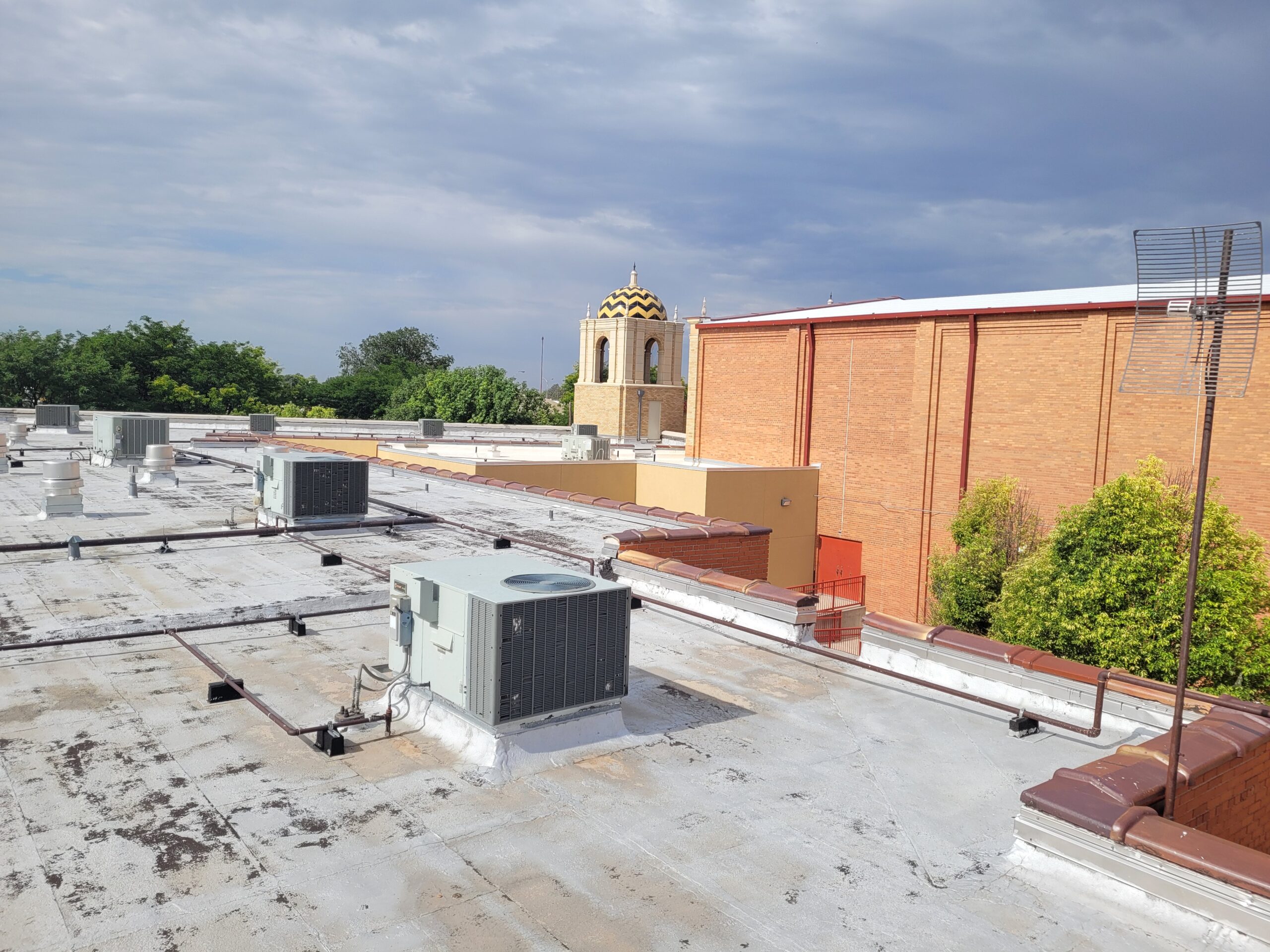
Commercial Roof Service Agreements in San Antonio, TX
Ask a CFO what the worst roofing outcome is and the answer is rarely a leak. It is the unbudgeted invoice - the emergency mobilization at premium rates, the wet insulation tear-out nobody saw coming, the replacement that lands two fiscal years before the reserve schedule said it would. A commercial roof service agreement exists to take that category of surprise off the table. The roof becomes a known annual number, and the number comes with data behind it.
The structure is simple. One flat yearly price covers two scheduled rooftop service visits, the standing scope performed at each one, and the reporting that follows. The visits track the South Texas weather calendar: the first lands ahead of the spring hail and thunderstorm window, so the roof meets storm season with seams tight and drains open; the second comes after the long heat finally breaks, to correct what months of 160-degree membrane temperatures did to sealants, laps, and pipe boots. Between those two dates, the standing scope - drain and scupper clearing, flashing touch-up, on-the-spot minor repairs - happens without change orders or per-incident invoices.
One Number Instead of a Guess
The agreement price is set from the roof itself: area, system type, equipment density, access, and current condition, established on a baseline walk before anything is signed. From then on, the only roofing costs outside the annual figure are repairs large enough to deserve their own approval - and those arrive as photographed, located, priced recommendations you can schedule against your quarter, not emergencies that name their own price. Owners who have run buildings on reactive repair calls know the difference: the same defect costs a few hundred dollars found in March and five figures found during a tenant buildout in August.
The Forecast Is the Product
Because the same crew reads the same roof twice a year, the reports compound into something a one-off inspection can never give you: a trajectory. Ponding footprints measured visit over visit, seam failure frequency, granule loss, moisture findings - together they support a defensible read on remaining service life and a three-to-five-year capital outlook per building. Replacement stops being a guess in a reserve study and becomes a scheduled project in the fiscal year you pick. Catching the roof early also keeps the cheaper exits open: restoration coatings and recover systems both require a dry substrate, and the agreement is what keeps the substrate dry long enough to qualify.
For portfolio owners in San Antonio - a medical office near the Medical Center, flex space up IH-10, a distribution box on the Southside - the agreement consolidates all of it: one schedule, one report format, one annual figure per building, and a portfolio-level view of which roof needs capital next. That ranking is exactly the sheet an owner wants in front of them at budget season.
What the Visits Buy Besides Numbers
The same documentation carries weight in three other rooms. Manufacturer warranty administrators expect maintained-and-recorded roofs, and the visit reports satisfy that requirement without a separate effort. Insurance adjusters working a hail claim treat a dated pre-storm baseline very differently from a bare assertion that the roof was fine. And when a building goes to market, a clean multi-year service file answers the buyer's roof question before it becomes a price negotiation. Agreement holders also get priority dispatch after storm events - when hail crosses the city and every owner calls at once, scheduled clients are seen first.
Questions From the Budget Side
How is the annual price set?
From a baseline roof walk, not a rate card. Roof area, membrane type and age, rooftop equipment count, access logistics, and existing condition all move the number. Any urgent defects found on the baseline are corrected and priced separately up front, so the agreement starts from a known state and the annual figure stays stable.
What is inside the flat price, and what gets quoted separately?
Inside: both scheduled visits, drain and scupper clearing, sealant and flashing touch-up, minor membrane repairs completed during the visit, and the photo report after each. Separately quoted: anything large enough to be its own project - section replacement, tapered insulation work, major flashing rebuilds. Those always arrive as documented recommendations with photos and a firm number, never as a surprise line on an invoice.
Can the reports feed our capital plan or reserve study?
That is what they are for. Each report ends with a condition trajectory and a recommended horizon for major work, and we will map the format to whatever your reserve study or property-management software expects. Owners using the agreement across several buildings get a ranked portfolio view updated after every visit cycle.
We plan to sell the building in a few years. Is an agreement still worth it?
Often more so. A documented service history shortens roof due diligence, defuses the buyer's biggest repair-credit argument, and preserves the manufacturer warranty a buyer inherits. The cost of the agreement between now and closing is usually a rounding error against what an unanswered roof question costs in negotiation.
Frequently Asked Questions
- What happens on the first visit of a roof service agreement?
- The first visit is the baseline: full roof walk, photo documentation keyed to a roof plan, drainage check, warranty file review if one exists, and correction of any urgent defects. The annual price and visit schedule are set from that record.
- How quickly can an agreement start in San Antonio?
- Send the address, roof type if you know it, and access notes through the form. Baseline walks are usually scheduled within days, and the agreement can be active before the next storm season window.
- What information helps price a roof service agreement accurately?
- Roof area, membrane type and age, number of rooftop units and penetrations, access constraints, tenant hours, existing warranty paperwork, and any leak history. Photos of drains, seams, and interior staining speed up the baseline.