
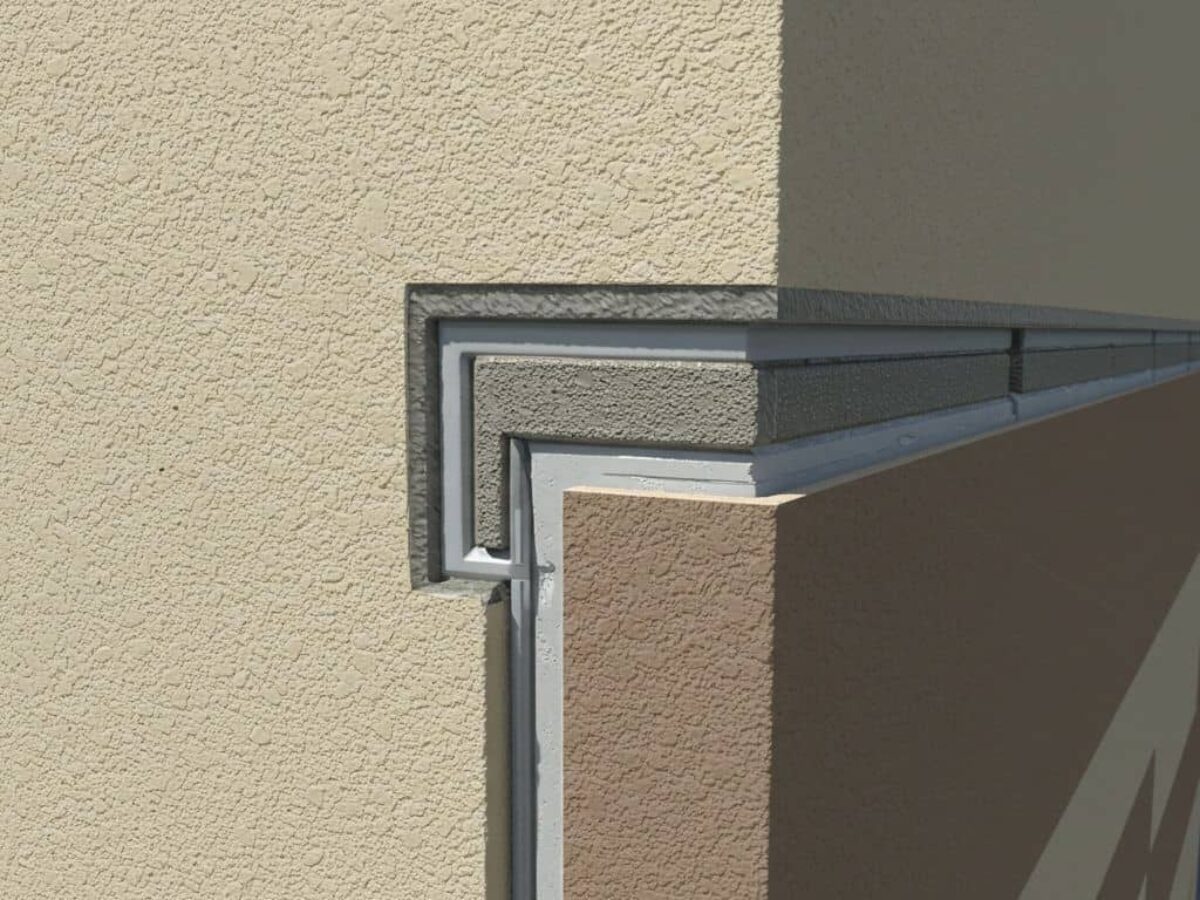
Expansion joints in commercial buildings exist because buildings move. Thermal expansion and contraction, differential foundation settlement, and seismic loading all produce movement at the joint - movement that the rigid building structure cannot absorb and that would crack if forced. The expansion joint cover on the roof is the membrane detail that spans the joint opening and accommodates that movement while maintaining a watertight seal.
San Antonio's expansion joint environment is more demanding than most Texas cities because of the Edwards Aquifer karst limestone substrate beneath the city. Karst geology produces localized dissolution voids in the limestone that shift over time, creating differential settlement patterns that add structural movement to the thermal movement the joint was originally designed for. Buildings on the Edwards Plateau - which extends from downtown San Antonio northwest through Leon Valley, Helotes, and into the Hill Country - can experience foundation movement that is not predictable from soil borings alone. That unpredictable movement stresses expansion joint covers beyond their design accommodation, and it is why we see expansion joint failures on buildings that are only 10 to 15 years old in San Antonio when the same joint detail lasts 25 years in a city on stable alluvial soils.
We repair and replace expansion joint covers on TPO, EPDM, and modified bitumen systems. We specify joint covers designed for the anticipated movement at each joint - which requires understanding the building's structural system and the movement history we observe at inspection, not just installing a standard-width cover over the existing condition.
Expansion Joint Cover Systems - EPDM and TPO
EPDM expansion joint covers: EPDM is the most common expansion joint cover material on San Antonio commercial roofs because of its excellent elongation properties - EPDM can stretch to 300 percent of its original length before failure, which gives it significant accommodation capacity. EPDM joint covers are typically pre-formed or fabricated from EPDM sheet in widths designed for the joint opening plus the required movement accommodation. They are adhered to the roof membrane on both sides of the joint and left loose in the middle to allow movement. The loose center creates a low-point trough that must drain - joints that trap water in the center trough accelerate adhesive deterioration on both sides.
TPO expansion joint covers: TPO covers are used when the field membrane is TPO and the owner prefers a visually consistent system, or when the building's wind-uplift design requires the weld-seam adhesion strength that TPO provides. TPO has lower elongation than EPDM (approximately 200 percent), so TPO covers must be wider for the same movement accommodation. Pre-formed TPO covers are available in standard widths from Carlisle, Versico, and GAF. Field-fabricated TPO covers require careful attention to corner geometry - poorly fabricated TPO corners at expansion joint intersections are a common failure point.
Cover width sizing: The cover must be wide enough to accommodate the maximum expected joint movement - typically 1.5 to 2 times the joint opening - plus the adhesion zones on each side of the joint. A joint designed for 1/2-inch movement that has experienced 3/4-inch movement due to karst settlement will tear the adhesion zone from the membrane on one or both sides. We measure the actual joint opening and movement history during inspection and specify cover width based on actual conditions.
Failure Patterns and What They Indicate
Adhesion failure along one side: The cover has peeled up from one side of the joint. Common cause: the movement at the joint exceeded the accommodation capacity of the cover, or the adhesive was applied to a contaminated substrate. If the peeled side consistently faces the same direction (typically the building expansion side during summer thermal growth), the cover may be undersized for the thermal movement.
Cover tear at the center: The cover has torn across the middle of the joint rather than peeling from the side. Common cause: the joint movement exceeded the cover's elongation capacity, typically because karst-related structural movement added to the thermal movement. A torn cover requires replacement - a patch over a tear at the center of a moving joint does not hold.
Corner failures at joint intersections: The intersection of two expansion joints requires a field-fabricated or pre-formed corner piece. Corner failures are almost always a fabrication or installation error - the corner piece was bridged rather than coped, or the laps were made in the wrong sequence. Corner failures produce a point-source leak at the joint intersection.
Debris accumulation in joint trough: The trough at the center of the joint collects debris - leaves, organic matter, gravel from adjacent surfaces. Debris holds moisture against the cover adhesion and accelerates deterioration. On buildings with trees adjacent to the roof, the joint trough can fill completely with organic matter within two to three years of installation. Trough cleaning is part of our annual maintenance program on buildings with expansion joints.
Karst-Movement Considerations for San Antonio Buildings
Why San Antonio expansion joints move more: The Edwards Plateau karst - exposed at the surface in the Hill Country and covered by thin alluvial soils in the San Antonio basin - is composed of highly soluble Edwards limestone. Ground water moving through fractures and bedding planes dissolves the limestone and creates void space over time. When void space collapses, the surface above settles - sometimes gradually over years, sometimes suddenly. This produces differential movement between adjacent building sections that is additive to the thermal movement the expansion joint was designed for.
Buildings most at risk: Single-story commercial buildings with large footprints on shallow spread footings are most affected by karst settlement because the footprint covers more of the subsurface area and the shallow foundation does not penetrate below the active karst zone. The IH-10 West corridor from Leon Valley through Helotes, and the US-281 North corridor from Loop 1604 through Stone Oak, have high concentrations of commercial buildings in exactly this condition - large-footprint single-story retail and office buildings on shallow foundations over Edwards limestone.
Specifying for karst movement: When we replace an expansion joint cover on a building with a karst-movement history, we oversize the cover width relative to the current joint opening to provide additional accommodation capacity. We also specify EPDM rather than TPO where both are compatible with the field membrane, because the higher elongation of EPDM provides more movement buffer before adhesion failure. We note the karst-movement context in the closeout documentation so the next inspection cycle knows to watch the joint more closely than a standard thermal-movement-only joint.
Frequently asked questions
How do I know if my building has expansion joints in the roof?
Expansion joints in single-ply commercial roofs are visible as a raised cover strip - typically 12 to 18 inches wide - running in a straight line across the roof surface. They usually follow the building's structural grid and appear at intervals of 150 to 200 feet on large-footprint buildings. If you are not sure whether your building has expansion joints, we identify them during the initial roof inspection and flag their condition in the inspection report.
Can an expansion joint cover be repaired, or does it always need full replacement?
Adhesion failures along one side - where the cover has lifted from the membrane but is not torn - can often be repaired by cleaning the substrate, re-applying compatible adhesive, and re-seating the cover. Tears through the center of the cover require replacement, because a patch at the center of a moving joint does not have the elongation capacity to accommodate continued movement. Corner failures require removal and reinstallation of the corner piece with correct lap sequence. We assess each failure mode during inspection and recommend repair or replacement based on the failure type and the movement history we observe.
The expansion joint cover was just replaced two years ago and it is already failing. What is causing that?
Premature failure of a recently installed expansion joint cover typically traces to one of three causes: cover width undersized for the actual joint movement, adhesive applied to an improperly prepared or contaminated substrate, or corner pieces that were bridged rather than coped at joint intersections. In San Antonio, karst-induced structural movement that exceeds the thermal movement the cover was sized for is a fourth cause that is specific to our market. We will assess the failed cover and the joint movement pattern before recommending a replacement specification so we do not replicate the undersized cover that failed.
Is expansion joint repair covered by the existing roof system warranty?
It depends on the warranty type. NDL manufacturer warranties typically cover defects in the membrane system including expansion joint covers installed as part of the warranted system. They do not cover failure caused by movement that exceeds the cover's design accommodation - which is a building structural condition, not a roofing defect. Workmanship warranties from the installing contractor cover installation errors - incorrect cover width, improper adhesive application, corner fabrication failures. We review the applicable warranty language before recommending a claim path.
Expansion joint failing on your San Antonio commercial roof?
We assess the failure type and movement history, specify a cover replacement sized for the actual movement at your joint, and install it with the karst-movement context San Antonio buildings require.
Request a Roof Scope