
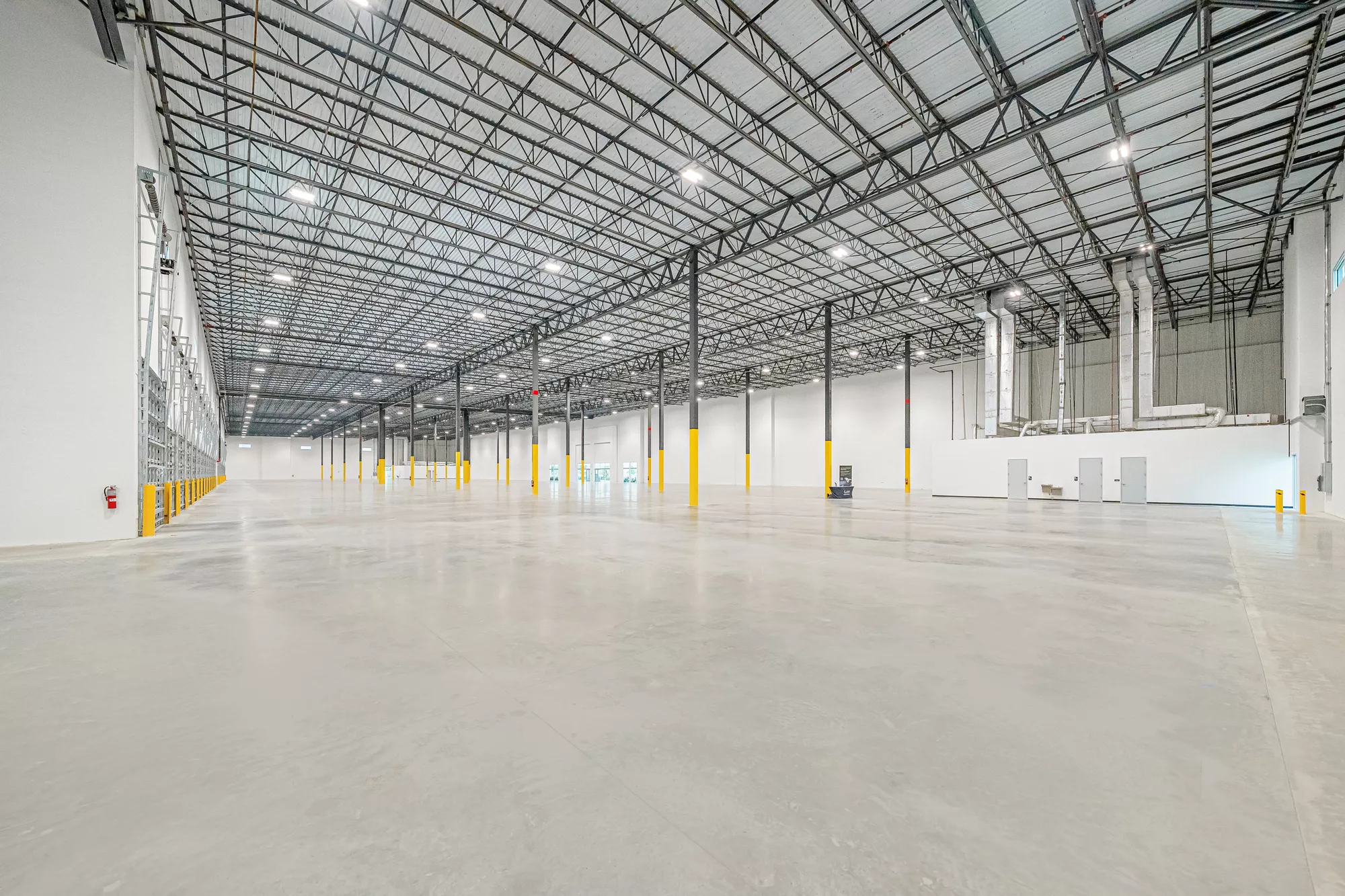
San Antonio's position at the convergence of IH-35 and IH-10 makes it a natural node in the South Central logistics network. IH-35 carries the NAFTA trade corridor between Laredo and the interior U.S. The Union Pacific Sunset Route runs east-west through the city. Port San Antonio on the Southwest Side operates a cargo handling facility alongside its aerospace and manufacturing tenants. The combination has attracted a dense distribution center inventory along the IH-35 North and South corridors and at Schertz, Converse, and Live Oak along the northeast arc of Loop 1604.
Amazon's ROC8 fulfillment center in Schertz on IH-35 North is the regional anchor of the e-commerce logistics buildout - a 3.5-million-square-foot facility that represents the scale of modern distribution center construction in this market. The FedEx Ground hub on the IH-35 South corridor near the Toyota Manufacturing Texas campus handles regional package sorting. Old Dominion, XPO Logistics, and Werner Enterprises operate facilities throughout the metro. These buildings are large-footprint, operationally continuous facilities - they do not shut down for roofing projects, which means our scheduling and sequencing has to accommodate 24-hour operational requirements.
Logistics and distribution buildings are, from a roofing standpoint, relatively straightforward in system type - large flat or low-slope roofs with TPO or EPDM, metal deck, and polyiso insulation. The complexity is operational: facilities that run 24 hours a day, seven days a week, with loading dock activity that affects our crane staging and material delivery windows, and facility managers who need to minimize the operational footprint of any roofing project.
Large-Footprint Distribution Center Roofing
Modern distribution centers in the San Antonio market run 500,000 to 3,500,000 square feet under roof. At that scale, a roofing replacement project is a significant capital event - and the production sequencing strategy is a major factor in total project cost and timeline. We sequence large-footprint projects in 50,000 to 100,000 square foot daily sections, each dried-in before the crew leaves the site, with the production schedule calibrated against the facility's operational calendar.
Crane positioning and material delivery on a distribution center is a logistics problem in its own right. Loading docks are in continuous use - semi-truck traffic at the dock doors does not pause for a roofing project. We map the facility's dock assignment and traffic pattern during the pre-construction scope walk and designate material staging areas that are clear of the operational traffic flow. Material deliveries are scheduled for early morning before the peak inbound freight window.
Roof drainage is the design challenge on large flat roofs. San Antonio's rainfall events - 50-year storms can deliver 4 to 6 inches in a few hours - require primary and secondary drainage systems that can handle significant flow rates. We assess existing drain capacity against the building's as-built drainage design and flag inadequate drainage as a scope item. Ponding water on a distribution center roof is a structural and membrane lifecycle concern that the facility manager needs to know about.
IH-35 Corridor - North and South
The IH-35 North corridor from Loop 410 through Live Oak, Schertz, and Selma carries the densest concentration of distribution and logistics facilities in the San Antonio metro. Amazon ROC8 in Schertz is the headline project, but the corridor also carries facilities operated by Home Depot, Target, HEB, Sysco, and dozens of third-party logistics providers. Buildings here are generally newer - 2000s and 2010s construction on first or second-generation TPO systems.
The IH-35 South corridor from Loop 410 toward Laredo carries a different mix: older industrial and distribution facilities from the 1980s and 1990s alongside newer cold-storage and heavy-industrial buildings associated with the Toyota Manufacturing Texas campus on Applewhite Road and the Caterpillar and Navistar facilities in the Southside corridor. Buildings in this zone often have roofing systems that are at or approaching the end of their design life - built-up roofs, original modified bitumen, and early-generation single-ply that is 20 to 25 years old.
The Union Pacific rail yards on the IH-35 South corridor add a constraint to roofing work at adjacent facilities: the rail corridor affects crane radius and creates noise and vibration that can affect membrane adhesion on fully-adhered systems during rail traffic. We account for rail proximity in our attachment method specification for facilities adjacent to the UP corridor.
FedEx Hub and Freight-Terminal Roofing
Freight terminals and package-sorting facilities like the FedEx Ground hub on the South Side have a specific roofing profile: long, narrow buildings with clerestory or monitor roof elements to bring natural light into the sort area, dock-high loading on two or more sides, and rooftop conveyor penetrations that require custom flashing details. The sort facility configuration creates irregular roof geometries that standard flat-roof details do not fully address.
We scope freight terminal roofing with a detailed penetration inventory - every conveyor penetration, every HVAC unit curb, every dock leveler exhaust - and design custom flashing details for any penetration configuration that deviates from the manufacturer's standard published detail. The warranty inspection at closeout requires that every penetration detail match either the manufacturer's published spec or a pre-approved custom engineering document. We prepare that documentation as part of the standard closeout package.
Frequently asked questions
How do you schedule roofing work at a facility that operates 24 hours a day?
We work with the facility manager to identify production windows that minimize operational conflict - typically starting tear-off after the overnight inbound freight window closes and completing daily dry-in before the afternoon outbound peak. We map dock assignment and avoid positioning equipment or materials where they would conflict with operational traffic. The facility does not shut down; the roofing project works around it.
Can you handle a 500,000 square foot distribution center replacement?
Yes. We have the crew capacity, equipment, and project management structure to handle large-footprint distribution center replacements. We sequence the work in daily sections with same-day dry-in, produce a written production schedule before contract signing, and assign a dedicated project manager who is on-site or reachable throughout the project.
What roof systems are standard on San Antonio distribution centers?
60-mil white TPO mechanically attached over polyiso insulation is the dominant system on buildings built in this market - reflective membrane handles San Antonio's heat load, and mechanically attached systems provide the wind-uplift resistance the IH-35 corridor's open-terrain wind exposure requires. EPDM 60-mil sees more use on older industrial buildings and on facilities where chemical exposure at penetrations makes EPDM the better material choice.
Roofing work on a San Antonio logistics or distribution facility?
Our project managers will walk the facility, document existing conditions, and produce a scope and production schedule that accounts for your operational requirements - without shutting you down.
Request a Roof Scope