
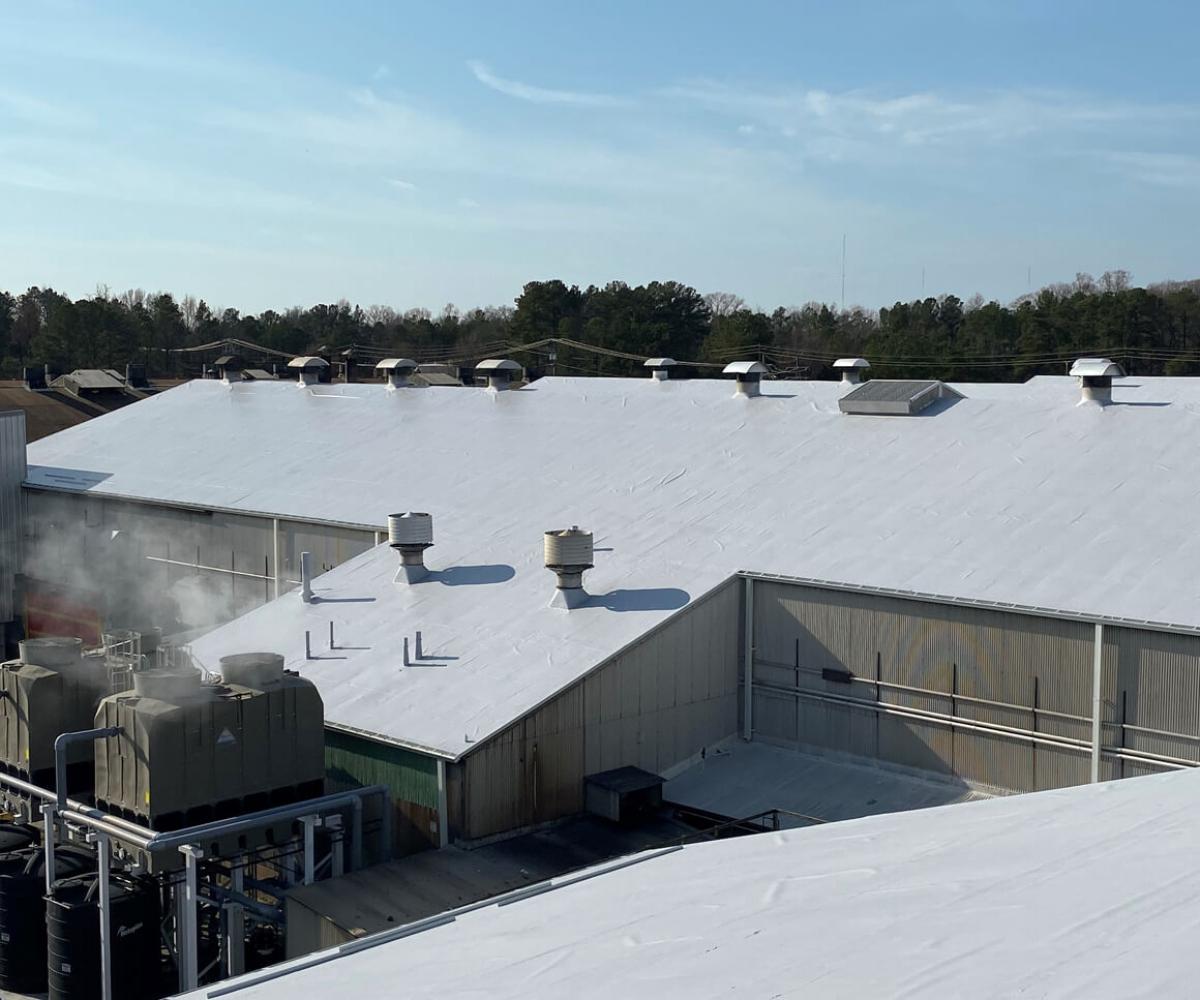
Manufacturing Roofing in San Antonio
Industries

Manufacturing Roofing in San Antonio

Commercial roofing for San Antonio manufacturing facilities - Toyota on Applewhite, Caterpillar Seguin, Boeing San Antonio, and Lockheed Martin Kelly - large-bay industrial roofing with production-continuity coordination.

Scope Type
Industries
Location
San Antonio, TX
Status
Scheduling Roof Walks
Focus
Building operations, safety requirements, production risk, access, and roof system fit.

Toyota Motor Manufacturing Texas on Applewhite Road on the South Side is one of the largest manufacturing facilities in the state - a 2.2-million-square-foot plant that produces Tundra and Tacoma pickups and employs more than 3,000 workers at the plant itself. The facility's roof is a capital asset that directly affects production continuity: a roof leak in the body shop, stamping area, or paint line can trigger a production stop that costs hundreds of thousands of dollars per hour. We understand that framing and scope manufacturing facility roofing work with it front of mind.

The broader manufacturing corridor on San Antonio's South and Southwest sides includes Caterpillar's Seguin facility 30 miles east on IH-10, Navistar's truck manufacturing plant, and a range of tier-one automotive suppliers clustered along the IH-35 South and US-90 corridors to serve Toyota. Boeing San Antonio operates T-1 Jayhawk aircraft maintenance and modification at Port San Antonio. Lockheed Martin operates F-16 and F-22 maintenance facilities at Kelly Field Annex. These are not standard commercial roofing projects - they are industrial facilities with specialized requirements that the average commercial roofing contractor is not equipped to handle.

Manufacturing facilities have roofing systems that differ from office and retail in important ways. High-bay clear-span construction - 40 to 80-foot eave heights - creates different wind uplift dynamics than low-rise commercial buildings. Chemical exposure from manufacturing processes affects membrane and adhesive selection. Crane hooks, forklift access to upper mezzanines, and rooftop mechanical systems serving production areas create a more complex penetration and access environment than a standard commercial building.

High-Bay Industrial Roofing - What Changes at Scale

Toyota's Applewhite Road plant and the aerospace hangar buildings at Port San Antonio are high-bay buildings where the roof is 40 to 80 feet above the floor. At those heights, wind uplift loads are significantly higher than on low-rise commercial construction, and the fastener density required to We design fastener patterns for high-bay buildings using the actual wind pressure calculations for the building's height, exposure category, and corner and edge zones - not a generic grid.

High-bay buildings also have different access requirements for roofing crews. At 40 feet of eave height, standard extension ladders are not an adequate means of access - we use aerial lifts, roof hatches, and fall-arrest systems appropriate for the height and the roof geometry. Our crews are trained and equipped for high-bay access. OSHA standards for fall protection at these heights are more stringent than for low-rise work, and we document our fall protection plan as part of the project safety plan.

Crane clearance inside a manufacturing facility is a coordination requirement that most commercial roofing contractors do not encounter. At Toyota and the aerospace facilities at Port SA, overhead cranes operate on tracks along the length of the building. Any roofing work that requires interior access - or that creates debris that could fall into the production area - must be coordinated with the production floor's crane schedule. We document crane clearance requirements in the pre-construction coordination meeting.

Chemical and Process Exposure at Manufacturing Roofs

Manufacturing facilities expose roofing systems to chemicals that don't appear in standard commercial environments. Automotive paint shop exhaust carries volatile organic compounds that can degrade TPO and EPDM membrane chemistry over time. Metal stamping facilities have cutting fluid mist that affects membrane adhesion and flashing integrity. Aerospace facilities handle hydraulic fluid, aviation fuel, and lubricants that create chemical exposure at roof penetrations near maintenance bays.

We specify membrane systems based on the chemical exposure environment at each facility. PVC membranes have better chemical resistance than TPO or EPDM in environments with significant solvent, oil, or fuel exposure at penetrations. EPDM has better performance than TPO in environments with ozone and UV without the chemical sensitivity that makes PVC the choice at high-chemical-exposure penetrations. We document the basis of our membrane selection in the written scope so the facility manager understands why we recommended the system we did.

Caterpillar's Seguin facility - 30 miles east of San Antonio on IH-10 - is a large-scale manufacturing environment for heavy equipment that involves significant cutting fluid and lubricant exposure. The roofing scope there has to account for the chemical environment at the manufacturing floor level and the penetration details for the ventilation systems that serve the production areas.

Production-Continuity Sequencing

A manufacturing facility cannot simply pause production for a roofing project. Toyota's Applewhite plant runs two production shifts per day. The aerospace maintenance operations at Boeing San Antonio and Lockheed Martin Kelly Field run according to aircraft maintenance schedules that cannot be moved to accommodate a roofing contractor. Our production sequencing on manufacturing facilities accounts for the production calendar from the start.

We identify the production-critical areas of the building - the paint line, the assembly floor, the aircraft maintenance bays - and sequence roofing work to avoid those areas during production hours. Work over production-critical areas is staged for planned production downtime: scheduled maintenance shutdowns, holiday shutdowns, or planned line changeovers. We develop this sequencing plan in consultation with the plant's facilities manager before the project starts - not after we are already on the roof.

Frequently asked questions

Can you work on a manufacturing facility without stopping production?

Yes. We sequence roofing work around the production calendar. Production-critical areas are scoped for planned downtime windows. Non-production areas - maintenance buildings, warehousing, administrative annexes - are executed during normal production hours. We coordinate the daily production plan with the facility manager and adjust based on production schedule changes.

What roof system do you recommend for a San Antonio manufacturing facility with chemical exposure?

It depends on the specific chemicals and exposure points. PVC membrane is the standard recommendation for facilities with significant solvent, oil, or fuel exposure at roof penetrations. TPO 60-mil or 80-mil is the standard for manufacturing facilities without significant chemical exposure. EPDM is a good choice on older industrial buildings where the recover path makes economic sense. We will specify the membrane based on the actual chemical environment at your facility, not a generic recommendation.

Do you work on aerospace hangar buildings at Port San Antonio?

Yes. Boeing San Antonio and other Port SA tenants operate high-bay aircraft maintenance buildings that require the high-bay access protocols, fall protection plans, and production-continuity sequencing we have described. We are familiar with the Port SA campus access requirements and have scoped work on aviation maintenance buildings.

Roofing work on a San Antonio manufacturing or industrial facility?

Our project managers will scope around your production calendar, address chemical exposure requirements, and produce a written plan that accounts for high-bay access, crane clearances, and production-continuity requirements.

Request a Roof Scope

Need Manufacturing Roofing in San Antonio?