
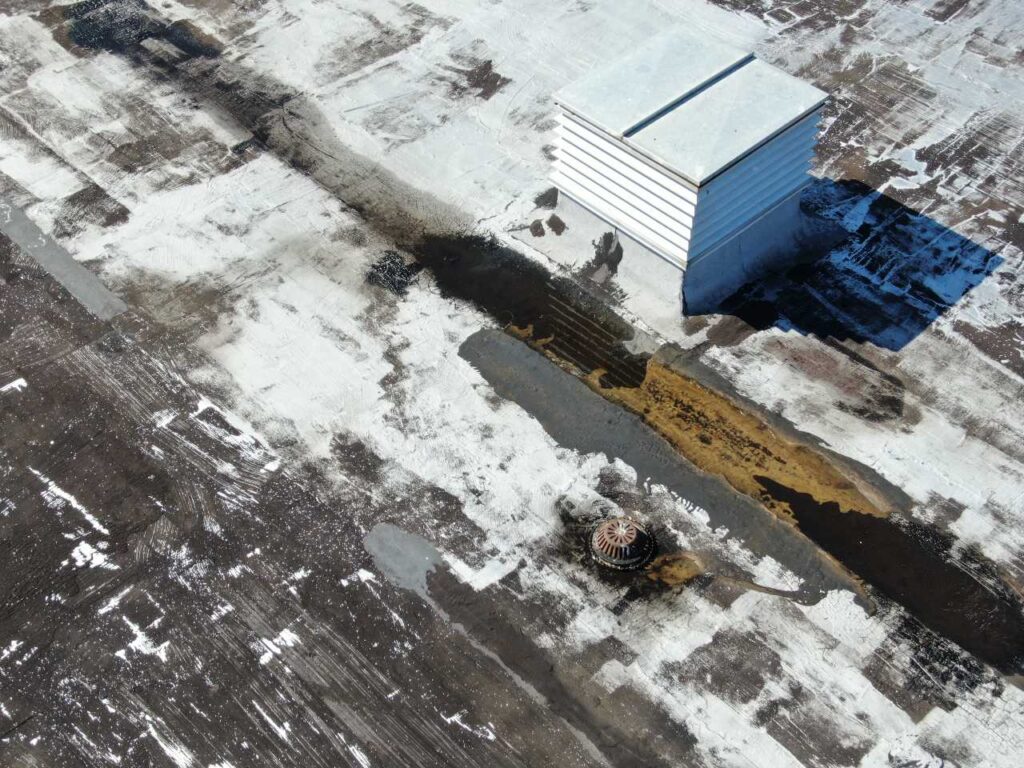
Uri Freeze Damage Patterns on San Antonio Commercial Roofs
Parapet base flashing separation: The base flashing at the parapet wall is the most common Uri damage location on San Antonio commercial roofs. Base flashings bonded with contact adhesive - the most common installation method for TPO and EPDM flashings on roofs installed before 2015 - rely on adhesive bond strength that degrades at sustained subfreezing temperatures. When the flashing contracted at 4°F, the adhesive bond cracked at the top termination. The flashing settled back when temperatures rose and may look intact visually while carrying a compromised bond at the top that allows water entry under driving rain.
Heat-welded seam brittle fracture: TPO seam welds that were field-welded at cooler temperatures - common in October and November installations - can have areas of incomplete fusion that are undetectable by probe test at installation temperature but crack under the thermal contraction of a sustained hard freeze. Uri exposed this hidden defect across roofs that had passed installation quality control. The crack appears as a narrow opening along the weld line that is invisible in dry conditions and becomes a water-entry point when wet.
Pitch pocket and pitch pan deterioration: Pitch pockets - the pitch-filled metal pan flashings used on older San Antonio commercial roofs - contracted under Uri and cracked the dried bitumen or pitch filler at the surface. Cracked pitch pocket fill is an immediate water-entry point at every penetration it covers. We inspect every pitch pocket on pre-2021 roofs and specify replacement with manufactured pipe boots or fabricated metal flashings.
Membrane shrinkage at transitions: EPDM membrane on pre-2021 San Antonio roofs sometimes exhibits permanent shrinkage after the Uri freeze - the extended cold exposure caused dimensional change that pulled the membrane away from flashing terminations and drain bowls. This is distinct from the flashing separation and produces a gap at the membrane-to-flashing interface that is visible but easy to overlook as 'normal wear.'
Frequently Asked Questions
- What happens during a roof scope for Freeze Damage Roof Repair?
- We review roof access, the existing system, drainage, penetrations, leak or damage history, and any photos or warranty records you already have. Then we document the repair, replacement, coating, or maintenance path that fits the building and timing.
- How quickly can you look at Freeze Damage Roof Repair in San Antonio?
- For active leaks or storm damage, send the address, photos, access notes, and timeline through the form. Those details help us route the call, prepare the roof walk, and avoid wasting time on the first visit.
- What information helps price Freeze Damage Roof Repair accurately?
- The useful details are roof type, approximate square footage, age, leak locations, access constraints, tenant hours, warranty paperwork, and any insurance or capital planning deadlines. Photos of drains, seams, penetrations, and interior staining help us scope faster.