
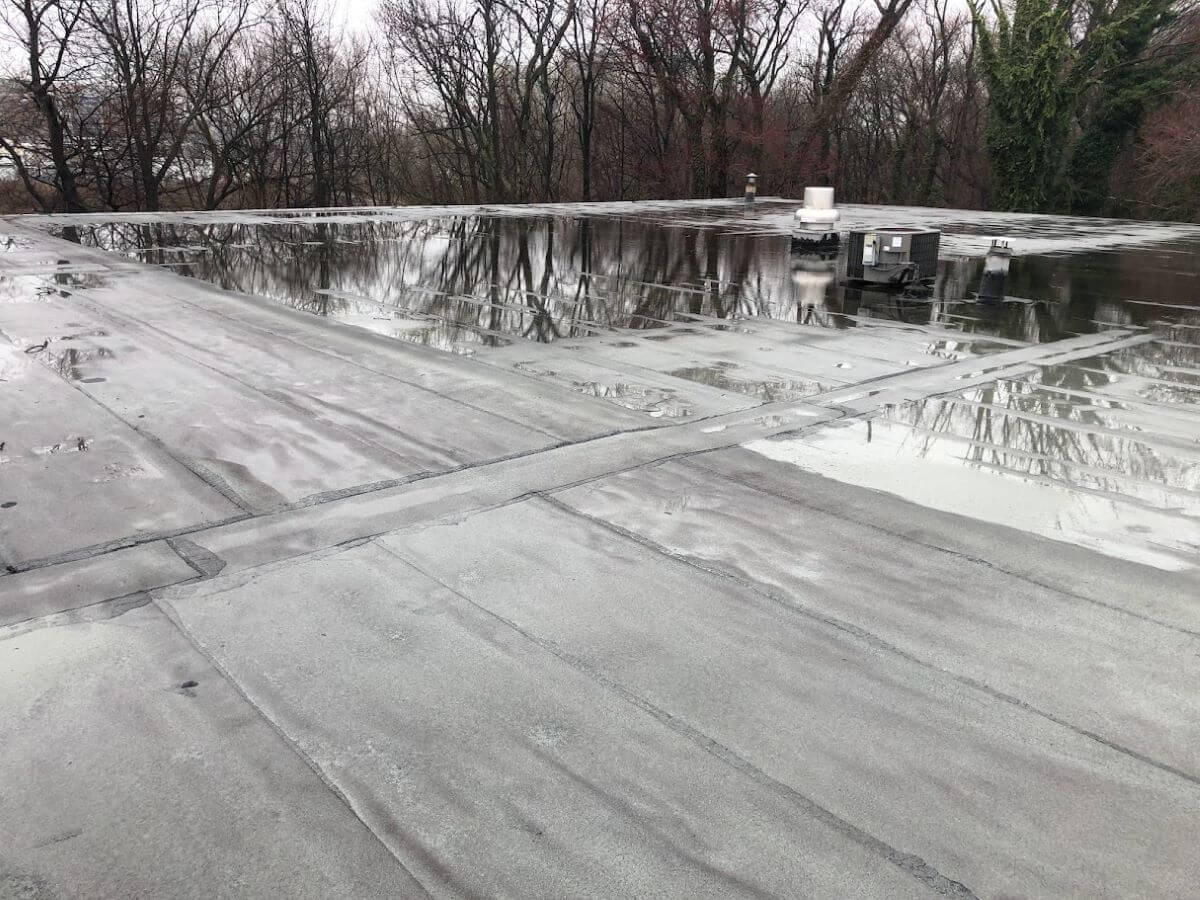
How Water Damage Progresses in a San Antonio Commercial Roof
Stage 1 - Entry point: Water enters through a compromised membrane seam, a failed flashing, a cracked pitch pocket, or a blocked drain that creates ponding above a compromised area. The entry point may be as small as a pinhole in a heat-welded seam or as large as a separated parapet base flashing. At this stage there is no visible interior evidence.
Stage 2 - Insulation saturation: Water moves laterally through the insulation layer, following the path of least resistance through insulation joints, fastener plate locations, and compression points from foot traffic. Polyiso insulation absorbs water into its cell structure - once saturated, it does not dry out when the weather improves. The moisture stays trapped in the insulation indefinitely. On San Antonio roofs, this stage can last months or years before interior evidence appears.
Stage 3 - Deck contact and interior infiltration: When saturation reaches the deck level - particularly on concrete deck or lightweight concrete fill systems - moisture begins migrating through the deck. Metal deck develops surface corrosion. Concrete deck develops efflorescence and eventual deterioration. Interior infiltration becomes visible at ceiling tiles, electrical conduit, and wall surfaces at the point where water finds a pathway through the deck.
Stage 4 - Membrane acceleration: Saturated insulation in contact with the underside of a single-ply membrane accelerates membrane deterioration at the saturated zone. The membrane loses adhesion to the insulation substrate, seams in the saturated area face higher stress from the softened substrate, and the UV degradation that the membrane would have experienced over 10 years happens in 3 to 5 years in the saturated zone.
Frequently Asked Questions
- What happens during a roof scope for Water Damage Roof Repair?
- We review roof access, the existing system, drainage, penetrations, leak or damage history, and any photos or warranty records you already have. Then we document the repair, replacement, coating, or maintenance path that fits the building and timing.
- How quickly can you look at Water Damage Roof Repair in San Antonio?
- For active leaks or storm damage, send the address, photos, access notes, and timeline through the form. Those details help us route the call, prepare the roof walk, and avoid wasting time on the first visit.
- What information helps price Water Damage Roof Repair accurately?
- The useful details are roof type, approximate square footage, age, leak locations, access constraints, tenant hours, warranty paperwork, and any insurance or capital planning deadlines. Photos of drains, seams, penetrations, and interior staining help us scope faster.