
Cool Roof Systems - Reflective Membranes and Coatings for San Antonio's 100°F Summer Load
Roof Systems

Cool Roof Systems - Reflective Membranes and Coatings for San Antonio's 100°F Summer Load

Cool roof systems for San Antonio commercial buildings - white reflective membranes, fluid-applied coatings, IECC energy code compliance, and measurable HVAC energy savings in 100°F+ summers.

Scope Type
Roof Systems
Location
San Antonio, TX
Status
Scheduling Roof Walks
Focus
Deck type, insulation, attachment, drainage, warranty path, and heat exposure.

Cool roofing in San Antonio is not a marketing term - it is an energy code requirement and a measurable HVAC energy benefit. Texas IECC 2021 requires low-slope commercial roofs in Climate Zone 2 (which covers all of Bexar County and most of the San Antonio metro) to A dark membrane or aggregate BUR surface does not A white TPO, white PVC, or fluid-applied silicone coating with the right CRRC-rated values does.

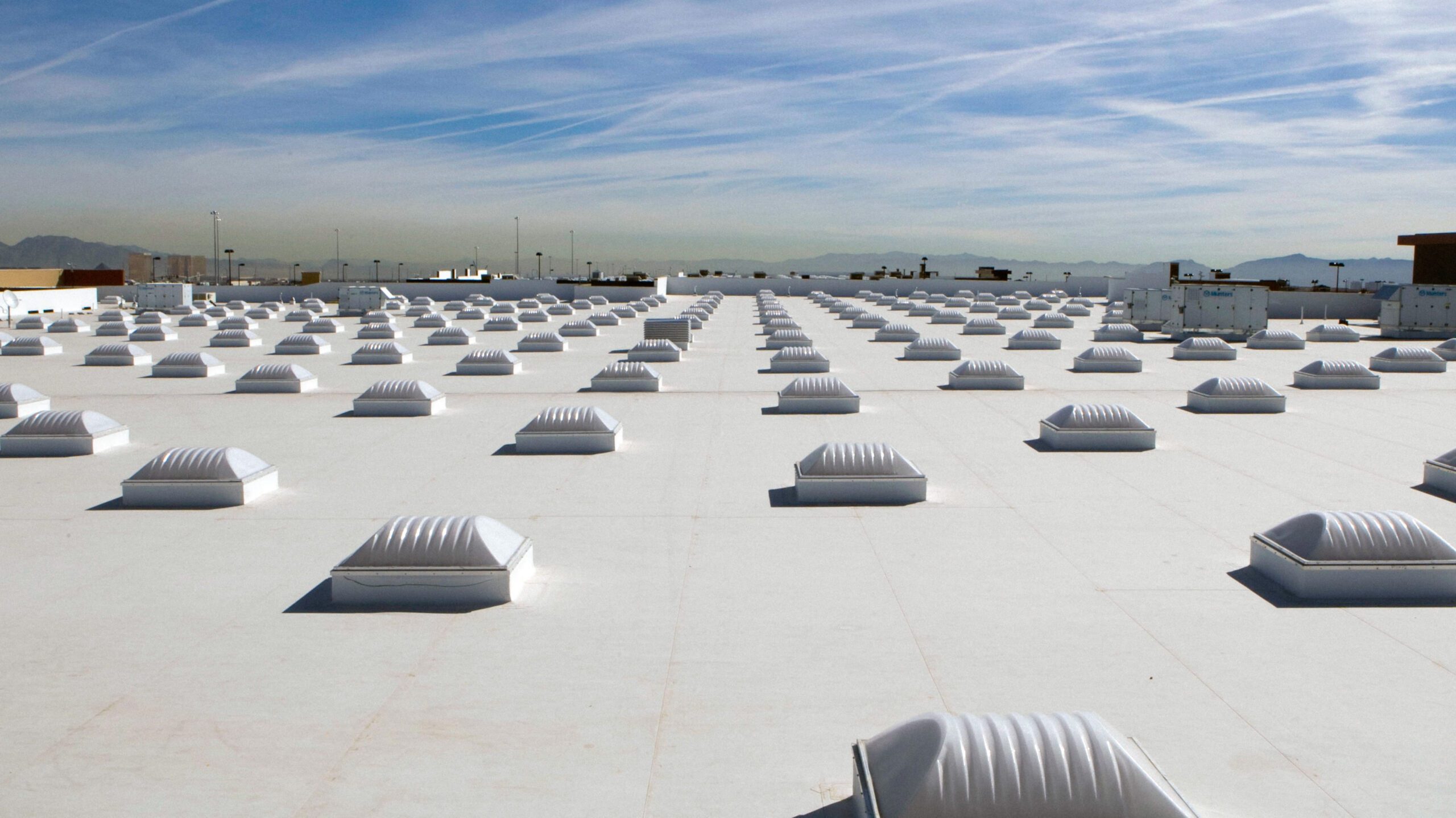
The benefit is not theoretical. A white TPO roof in San Antonio reflects roughly 80% of incoming solar radiation and emits roughly 90% of the heat it does absorb. Compared to a dark modified bitumen or gravel-surface BUR, the white membrane keeps the rooftop substrate 50 to 70°F cooler during peak summer heat. That temperature differential directly reduces the heat load on the building's air conditioning system - and in a San Antonio commercial building running HVAC from May through October, the energy savings are significant enough to appear in the utility bills within the first full cooling season.

White Membrane vs. Reflective Coating - Which Achieves Cool-Roof Performance

White single-ply membranes - TPO 60-mil or 80-mil, PVC 50-mil or 60-mil - are the cleanest path to cool-roof compliance on a new roof or full replacement. The white surface has CRRC-rated solar reflectance of 0.80 or higher and thermal emittance of 0.90 or higher from every major manufacturer, meeting IECC 2021 requirements without supplemental coating. This is the standard specification for new commercial construction in San Antonio and the standard recommendation for any full-replacement project.

Fluid-applied reflective coatings - silicone, acrylic, or urethane - are the cool-roof upgrade path for existing buildings that have dark membranes and are not candidates for full replacement. A white silicone coating applied at 20 to 30 dry mils over an existing dark EPDM, mod-bit, or BUR surface achieves CRRC-rated reflectance and emittance values that meet IECC 2021 cool-roof requirements. The coating converts a non-compliant roof to a compliant cool roof without the capital cost of full tear-off and replacement.

The CRRC (Cool Roof Rating Council) database is the authoritative source for reflectance and emittance ratings for both membranes and coatings. We specify products by their CRRC-listed values and document those values in the permit application and the project closeout package. The rated values - not manufacturer marketing claims - are what matter for IECC compliance documentation.

Energy Code Compliance for San Antonio Commercial Buildings

Texas adopted IECC 2021 with state amendments. For low-slope commercial roofs (slope under 2:12) in Climate Zone 2, the code requires: solar reflectance of 0.55 or greater for three-year aged value, and thermal emittance of 0.75 or greater. These values must be documented with CRRC ratings for the specified product - not estimated or calculated from similar products.

Permit applications for commercial roof replacements in San Antonio require the CRRC product listing number and the rated reflectance and emittance values for the proposed membrane or coating. City of San Antonio Development Services reviews cool-roof compliance as part of the commercial roofing permit application. We prepare the compliance documentation as part of the permit package - the building owner does not need to navigate the CRRC database or the IECC compliance calculation independently.

Buildings replacing roofs under the IECC 2021 exemption - where the existing system does not meet cool-roof requirements and the replacement cost would exceed a threshold relative to building value - are still subject to cool-roof requirements in most cases. The exemption is narrowly defined and rarely applies to straightforward commercial roof replacements in San Antonio. We review the applicability during the scoping conversation.

Cool-Roof Performance in San Antonio's Operating Environment

The energy benefit of cool roofing is most pronounced in buildings with high ceiling heights and inadequate ceiling insulation - warehouse and distribution facilities, older retail buildings, and mid-century commercial buildings where the roof is the primary thermal boundary between conditioned space and the San Antonio summer heat. These buildings can see measured cooling energy reductions of 10 to 20% after cool-roof installation, which translates to a payback period of 3 to 7 years on the incremental cost of the white membrane over a dark alternative.

HVAC equipment load reduction is a secondary benefit that affects equipment service life. HVAC equipment running fewer hours to maintain setpoint temperature experiences less thermal cycling, less compressor runtime, and longer service intervals. For San Antonio buildings with aging HVAC equipment, reducing the roof heat load with a cool-roof system can extend equipment life enough to defer replacement - a capital benefit that does not appear in the energy cost calculation but matters to building owners managing capital budgets.

The February 2021 Uri freeze introduced a question about cool-roof performance in winter: does a reflective roof that reflects summer heat also reduce the benefit of solar heat gain in winter? In San Antonio's climate, the answer is largely no - the winter heating load is small relative to the cooling load, and the net annual energy balance strongly favors the cool-roof specification even accounting for the negligible reduction in winter solar gain.

Frequently asked questions

Does the City of San Antonio require cool roofing on commercial building replacements?

Yes, for low-slope roofs under IECC 2021. Solar reflectance of 0.55 or greater (three-year aged) and thermal emittance of 0.75 or greater are required for low-slope commercial roof surfaces. The permit application must document compliance with CRRC-rated product values. We handle the compliance documentation as part of every permit application.

What is the energy payback period for a cool roof upgrade in San Antonio?

The payback depends heavily on the building type, HVAC system efficiency, and the baseline roof before the upgrade. For older warehouse and retail buildings replacing dark modified bitumen with white TPO, documented cooling energy reductions of 15 to 20% are common - which at San Antonio commercial electricity rates typically produces a payback on the cool-roof premium of 3 to 7 years. Buildings with efficient HVAC systems and heavy ceiling insulation see smaller reductions and longer payback periods.

Can a cool-roof coating achieve IECC 2021 compliance on a building being retained?

Yes. A fluid-applied coating with CRRC-rated solar reflectance at or above 0.55 (three-year aged) and thermal emittance at or above 0.75, applied to an existing roof surface, achieves code compliance. This is the cool-roof path for buildings that are not candidates for full membrane replacement - the coating converts the dark surface to a compliant cool roof without a full replacement capital event.

Cool-roof upgrade or IECC compliance documentation for a San Antonio building?

Our project managers will assess the existing roof surface, identify the CRRC-compliant product path, and produce a scope with compliance documentation ready for the City of San Antonio permit application.

Request a Roof Scope

Need Cool Roof Systems - Reflective Membranes and Coatings for San Antonio's 100°F Summer Load?