
Silicone Roof Coating Systems - Fluid-Applied Recover for San Antonio's UV-Intense Climate
Roof Systems

Silicone Roof Coating Systems - Fluid-Applied Recover for San Antonio's UV-Intense Climate

Fluid-applied silicone roof coatings for San Antonio commercial buildings - 10, 15, and 20-year manufacturer warranties, UV protection, and ponding-water resistance for flat roofs.

Scope Type
Roof Systems
Location
San Antonio, TX
Status
Scheduling Roof Walks
Focus
Deck type, insulation, attachment, drainage, warranty path, and heat exposure.

San Antonio receives 220-plus days of sunshine annually. UV radiation at this latitude and in this climate degrades acrylic and urethane coatings faster than in northern markets - the same coating that carries 10 years of service life in the upper Midwest may show significant chalking, cracking, and reflectivity loss within under UV. It maintains its elastomeric properties over the full service life, stays flexible through freeze events, and holds reflectivity because its degradation mechanism does not involve chalking.

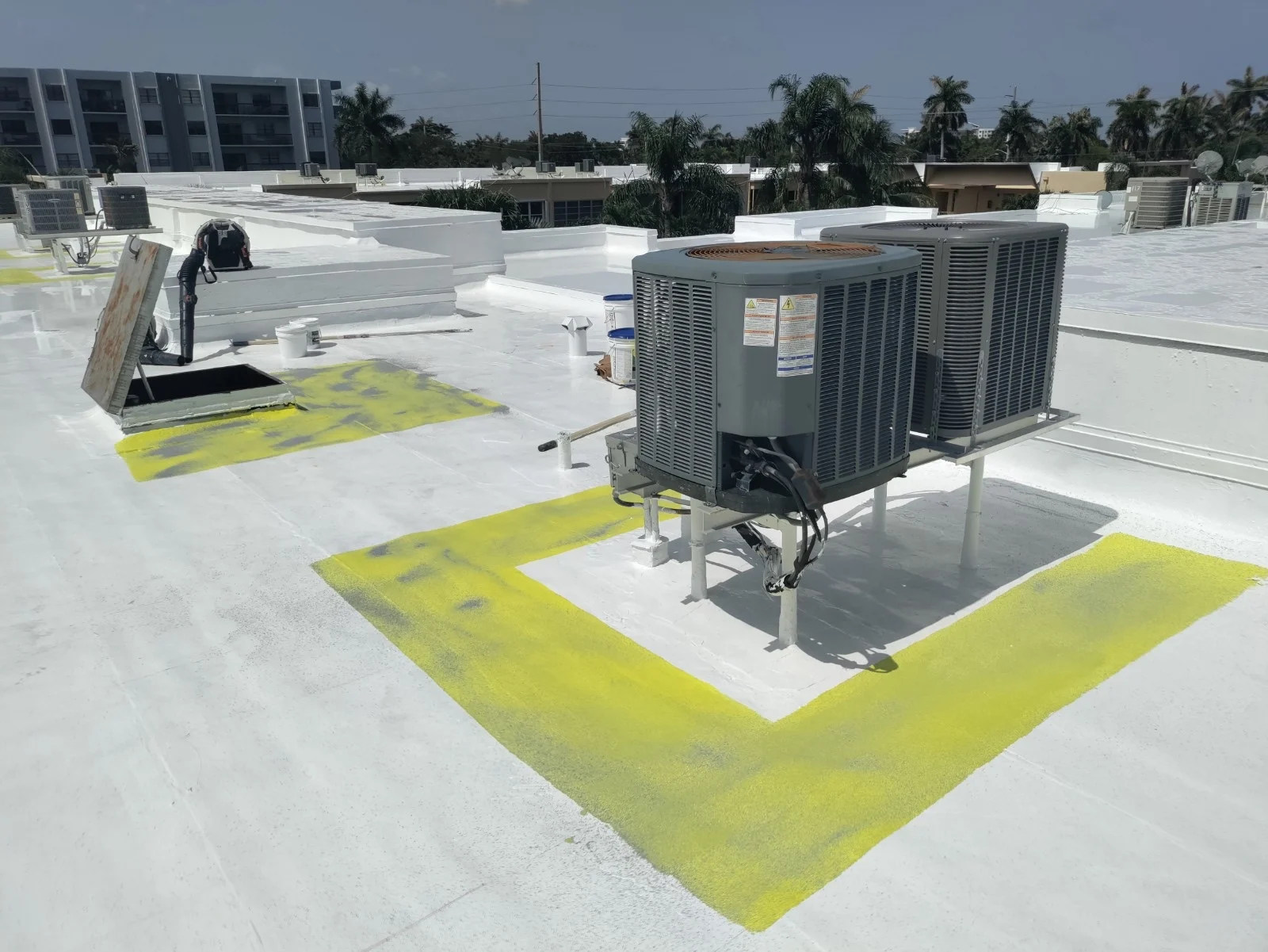
Commercial Roofers of San Antonio installs silicone coating systems on commercial flat roofs across the metro where the candidate criteria are met - existing membrane is structurally sound, insulation is dry on moisture core, ponding zones are identified and either addressed or documented, and the substrate is clean and properly prepared. The candidate evaluation is the critical step: a silicone coating on a failing membrane or over wet insulation does not fix the underlying problem. It hides it temporarily and produces a warranty claim that the manufacturer denies.

10-Year, 15-Year, and 20-Year Silicone Warranty Paths

The warranty term on a silicone coating system is a function of the dry film thickness applied. Most major coating manufacturers - Tremco, GE Advanced Materials, Pecora, Garland - tier their warranty terms by mil thickness: 20 dry mils for a 10-year warranty, 25 to 30 mils for a 15-year warranty, 35 to 40 mils for a 20-year warranty. The mil thickness is achieved in one or two coats depending on the product. San Antonio's UV intensity is the argument for the thicker application - we typically specify toward the 15- or 20-year tier because the UV load here degrades coating faster than in the climate zones where the 10-year specification was developed.

NDL (no-dollar-limit) warranties are available on silicone coating systems at the same tier structure - the 15- and 20-year paths typically include NDL terms that cover both labor and materials. The NDL warranty requires a manufacturer inspection after installation and documented annual maintenance. We build the post-installation inspection and the first-year maintenance call into the project closeout package.

Re-coat path: At the end of the warranty term, a silicone-over-silicone re-coat is straightforward - silicone bonds to cured silicone without extensive surface preparation. The re-coat is a fraction of the original application cost and extends the system another 10 to 15 years. This is the advantage of silicone over acrylic for San Antonio owners thinking in 30-to-40-year capital cycles: the re-coat path is simpler and cheaper than the alternatives.

Substrate Preparation - The Step That Determines Whether the Coating Works

Silicone coating adhesion fails when the substrate is contaminated with oil, chalk, dirt, algae, or an incompatible primer from a prior coating. Surface preparation on a San Antonio commercial roof that has been exposed to traffic, HVAC exhaust, and years of debris accumulation is not a single pass with a blower. It requires pressure washing, degreasing at contaminated zones around exhaust stacks, mechanical abrasion at delaminated or chalked areas, and a primer coat compatible with both the existing membrane and the silicone product.

Existing ponding zones require attention before coating. Silicone is rated for ponding water contact - it does not degrade in standing water the way acrylic does - but ponding in the same locations after the coating is applied will eventually stress the coating at those points and create long-term adhesion issues. We design tapered insulation fills or drain extensions to eliminate the worst ponding zones before the coating goes on, or we flag them explicitly in the scope document as conditions the owner is accepting.

Seam and flashing repairs before coating: Every open seam, flashing separation, and blister on the existing membrane gets repaired before coating application. Coating over an active defect does not waterproof it - the water finds the defect through the coating. We complete all required repairs under a separate repair line item before the coating scope begins, and we inspect the repaired areas before coating application to verify the repairs are sound.

Silicone Coating on San Antonio's Commercial Portfolio

The buildings that are strongest candidates for silicone recover in San Antonio are the office and retail buildings from the 1990s and early 2000s along the Stone Oak US-281 corridor, the Sonterra office parks, and the Loop 410 commercial ring - buildings running first-generation TPO that is now in the 15-to-25-year age range. Many of these systems have dry insulation, intact seams, and serviceable field membranes but are showing reflectivity loss and some seam wear that makes the tear-off-and-replace decision premature. A silicone coating at 25 to 30 dry mils restores the reflective surface, adds a waterproofing layer over the aging TPO seams, and carries a 15-year warranty for a fraction of the cost of a full membrane replacement.

Medical Center and institutional buildings are a second concentration of silicone coating work in San Antonio. Large hospital and medical office building roofs - where tear-off would require significant tenant disruption and crane staging in congested medical campus environments - are strong silicone candidates when the membrane is in coating-candidate condition. The recover avoids the disruption and cost of full tear-off while extending the asset's service life.

San Antonio's large-format warehouse and industrial buildings along IH-35 South are candidates when the existing EPDM or mod-bit system has reached the point where reflectivity is the primary concern. Adding a white silicone coating to a dark EPDM or mod-bit surface is the closest equivalent to a cool-roof upgrade without full membrane replacement.

Frequently asked questions

How do I know if my San Antonio roof is a good candidate for silicone coating?

The three qualifying conditions are: existing insulation is dry on moisture core, existing membrane is structurally intact (no active splits, no delaminated plies, no saturated blisters), and the existing membrane surface is compatible with silicone adhesion. TPO, EPDM, mod-bit, BUR, and metal panel systems can all receive silicone coatings with the right preparation. We assess candidate status during inspection and give a direct yes-or-no answer.

How long does silicone coating installation take on a large San Antonio roof?

Application rate for silicone coating is typically 3,000 to 5,000 sq ft per day per crew, depending on the number of penetrations and the complexity of the flashing work. A 50,000 sq ft roof takes approximately two weeks of production - surface preparation, seam and flashing repairs, primer, and the coating application. Production can run around building operations because there is no hot-work, no tear-off disruption, and no crane staging required.

What happens if it rains during the silicone application?

Silicone cures by moisture in the air - light rain does not necessarily compromise cured silicone. But fresh, uncured silicone that gets rained on before it skins can wash or run, creating thin spots that will not We monitor the NWS San Antonio forecast daily and do not apply silicone when rainfall probability exceeds 20% within the curing window for the product. Application is paused and the section is protected until conditions allow continuation.

Is your San Antonio roof a silicone coating candidate?

Our project managers will pull moisture cores, inspect the membrane, and tell you directly whether coating is the right scope or whether tear-off and replacement is the more defensible capital decision.

Request a Roof Scope

Need Silicone Roof Coating Systems - Fluid-Applied Recover for San Antonio's UV-Intense Climate?